
記事一覧へ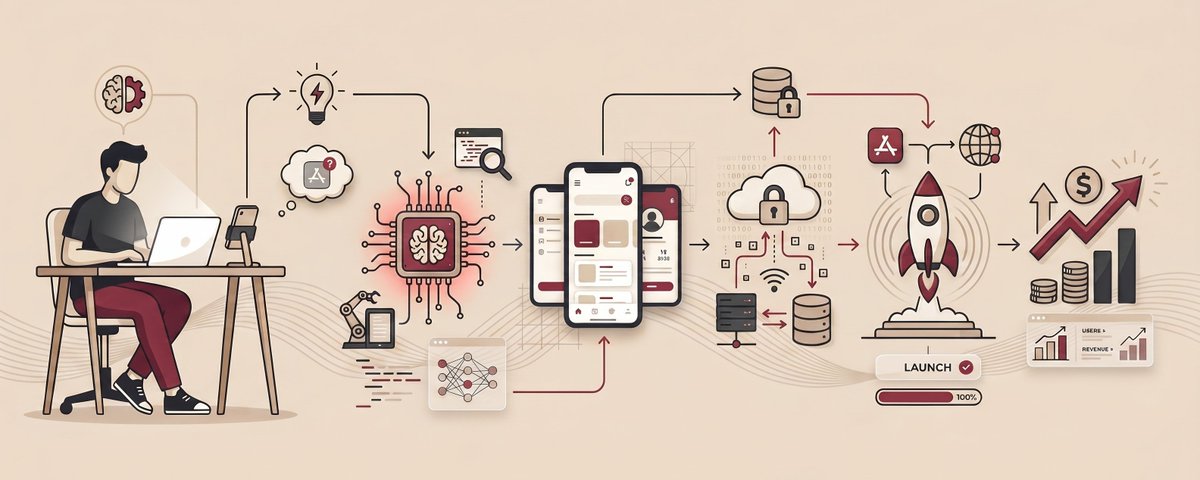
この1年間、クライアント向けにモバイルアプリを開発してきた。今月、自分のAIアプリスタジオを立ち上げた。
それが @ignytstudio だ。プランはシンプル。AIを使って月2本のモバイルアプリをビルドする。オーガニックTikTok、Instagram、インフルエンサーマーケティング、スパーク広告で収益化する。アプリがうまくいけばスケールし、うまくいかなければ切り捨てて次に進む。2週間の作業。最小限のリスク。
B2Cモバイルアプリは2026年において最も過小評価されている機会だと本気で思っている。そして多くのビルダーは間違った方向を見ていると思う。
その理由を説明しよう。
今、みんなSaaSを作っている。問題は、AnthropicやOpenAI、Perplexityのアップデート一つで、自分のプロダクト全体が一夜にして陳腐化しうることだ。6ヶ月かけてAIライティングツールを作ったのに、Claudeが同じ機能をネイティブに搭載してリリースする。ユーザーは去る。売上はゼロになる。今年だけで、こういう事態が複数社で起きるのを見てきた。
モバイルアプリにはこの問題がない。
シンプルで焦点を絞ったアプリを作る。TikTokのオーガニックコンテンツとUGCクリエイターでマーケティングする。アプリに勢いがつけば有料広告でスケールする。本物の数字が出れば、売上の倍数で売却できる。うまくいかなくても、費やしたのは2週間だ。6ヶ月でも、人生の貯金でもない。
Rork Maxのおかげで、こうしたアプリを作るのはかつてないほど速くなった。本物の、機能する、App Store対応のモバイルアプリを出荷するまでのハードルは過去最低だ。
この記事は、私が使っている正確なシステムだ。クライアントと自分自身のために10本以上のモバイルアプリを作って磨き上げたものだ。これが、@ignytstudio の最初のアプリ「Pact」で実行しているワークフローだ。パートナーを起こし合う責任感アラームクロックで、公開で作り、収益化している。
---
Prajwal Tomar @PrajwalTomar_ · Apr 13
パートナーが起きなかったら恥をかかせるアラームクロックアプリを作っている。
ソロアプリビルダーなら誰でもこの感覚を知っている。
(構造化されたAIワークフローを使えば)1週間でフルアプリを出荷できる。でも最初の100人の有料ユーザー獲得は?ノーアイデア。
私はそこにいた。アプリを出荷したことがある
[もっと見る]
引用
---
## Step 1: 作る価値のあるアイデアを見つける
ここが多くの人が何週間も無駄にするところだ。
以前は手作業でやっていた。Twitterを何時間もスクロールして。Sensor Towerをチェックして。Redditのスレッドを読んで。App Storeのチャートを眺めて、何かピンとくるものを待って。効果はあったが、遅くて一貫性がなかった。
そこでPerplexity Computerを使い始めた。
タスクを一つ与えた。実績ある収益、低い競合、TikTokで機能するディストリビューション角度を持つ、まだ手つかずのモバイルアプリ市場を見つけてほしい。
15分以内に完全な市場分析が返ってきた。
こんな結果だった。
Alarmyというシンプルなアラームアプリは月50万ドルを稼いでいる。月50万ダウンロード。Sensor Towerで確認済み。Waykという別のアラームアプリは2026年2月に立ち上がり、最初の45日で4万5千ドルの収益を達成した。App StoreのHealth and Fitnessカテゴリで15位に達した。Cal AIというフードスキャンアプリは、MyFitnessPalに買収される前は月200万ドルを稼いでいた。Rorkを使って18歳が作ったWrestleAIは月2〜3万ドルを稼いでいる。創業者は30万ドルの買収オファーを断った。
パターンは明確だった。シンプルなiOSアプリ + TikTokディストリビューション = 本物のお金。そして、ソーシャル責任感アラームを誰も作っていなかった。
そこからPactが生まれた。ブレインストーミングセッションからではない。シャワー中のひらめきからでもない。データから。
Perplexity Computerはアイデアを見つけただけじゃない。競合を調査し、Sensor Towerから収益見積もりを引き出し、App Storeのランキングを分析し、市場のギャップを特定した。すべて一つの自動化されたセッションで。私が何日もかけて手動でやっていたことを15分でやってくれた。
---
Prajwal Tomar @PrajwalTomar_ · Apr 10
MY AI AGENT JUST FOUND A $500K/MO APP MARKET NOBODY IS BUILDING FOR.
Perplexity Computer ONE プロンプトを与えた:作る価値のあるアプリを見つけてくれ。
「best app ideas 2026」でGoogle検索したわけじゃない。
1セッションで実際にやったこと:
→ Xで月1〜10万ドル稼ぐクリエイター5人をリサーチ
10 / 12 / 60 / 30K
[もっと見る]
---
## Step 2: デザインシステムを固める
これはプロっぽく見えるアプリとAIが5分で作ったように見えるアプリを分けるステップだ。ほぼすべての初心者がスキップする。
よくあるミスはRork Maxに飛び込んで画面をプロンプトし始めることだ。デザインシステムなしでは、Rorkが生成するすべての画面が微妙に異なって見える。スペーシングが違う。フォントウェイトが違う。カラーシェードが違う。5人の違う人がデザインしたように見えてしまう。
代わりにこうする。
DribbbleとPinterestを30〜45分スクロールする。何かをコピーするためではない。方向性を見つけるためだ。デザイナーはすでに何が良く見えるかを研究している。これらのプラットフォームには何千もの洗練されたモバイルアプリデザインが無料で置いてある。あなたの仕事は、すでに機能しているものからインスピレーションを得ることだ。
欲しいバイブに合った2〜3つのリファレンスアプリを探す。Pactのために、アラームアプリとソーシャルフィットネスアプリを見た。気に入った画面をスクリーンショットした。あるアプリのオンボーディングフロー。別のアプリのダッシュボードレイアウト。3つ目のアプリのカラーエネルギー。
そしてデザインシステムを構築する。これは、1つの画面をデザインする前にアプリのすべてのビジュアルを定義するドキュメントだ。プライマリカラーとセカンダリカラー。見出しと本文のフォントファミリーとサイズ。スペーシングルール。ボーダーラジウス。ボタンスタイル。アイコンスタイル。すべてを定義する。
これが固まったら、1つの画面を作る前にコンテキストとしてRork Maxに渡す。これでRorkにはガードレールができる。生成するすべての画面が同じビジュアル言語に従う。結果は、ハッカソンのプロジェクトではなく本物のアプリに見える。
---
Prajwal Tomar @PrajwalTomar_ · Apr 17
デザインシステムを使っていないからアプリが平凡に見える。
3つの一貫性のないアプリを出荷した後にこれを気づいた。それぞれ違う人が作ったように見えた。
今は20分このワークフローに費やして、20時間のUI修正を節約している:
→ Dribbbleでインスピレーションを見つける
→
[もっと見る]
引用
---
Prajwal Tomar @PrajwalTomar_ · Apr 16
PACT(@ignytstudio の最初のモバイルアプリ)を収益化するために使っている正確なテックスタックを公開する。
AI検証、リアルタイムプッシュ通知、アプリ内決済を持つソーシャルアラームアプリを作っている。
関連するすべてのツール:
→ ネイティブSwiftビルドのためのRork Max x.com/16769062847155…
5 / 2 / 23 / 8.5K
---
## Step 3: UI開発計画
これはほとんどのApp Store却下が起きる場所で、ほとんどのビルダーはそれに気づいていない。
Appleはバグだけでアプリをリジェクトするわけではない。ユーザーエクスペリエンスが壊れているとリジェクトする。最初の30秒以内にユーザーがメインタスクを完了する方法がわからなければ、問題がある。ナビゲーションが意味をなさないか、フローに行き止まりがあれば、Appleはレビューでフラグを立てる。
シンプルなアプリがリジェクトされる最大の理由はUXが悪いことだ。技術的な問題ではない。
フロントエンドの画面を作る前に、UI開発計画と呼ぶものを作る。これは、誰かがアプリを開いた瞬間からコアアクションを完了するまでのユーザージャーニー全体をマッピングするドキュメントだ。
Pactの場合、ジャーニーはこうだ:アプリを開く、アラームをセット、友人をPactに招待する、一緒に起きる。その間のすべての画面がマッピングされている。すべてのトランジション。すべての状態。ユーザーが何を見て、どんなアクションが取れて、各アクションがどこに繋がるか。
このドキュメントがフロントエンド全体の設計図になる。
そしてRork Max内で計画に従って画面ごとにビルドする。Rorkに次に何をすべきか推測させない。フルジャーニーが目の前にある。すべての画面が自然に次に繋がる。行き止まりなし。混乱するナビゲーションなし。切り離されたような画面なし。
フロントエンドはバックエンドコードに手をつける前に100%完成している必要がある。これは重要だ。UIとバックエンドを同時にビルドしようとすると、Rorkはコンテキストを失い、両方の品質が落ちる。フロントエンドから。常に。
---
Prajwal Tomar @PrajwalTomar_ · Apr 18
Rork Maxを使って責任感アラームアプリのUI全体を20分でデザインした。
アプリがやることは一つ:責任感を持って起こすこと。
使い方を考えなければならないなら、デザインで失敗している。
これはまだ最終版じゃなくて、フルフローだけ固まっている状態。次は
[もっと見る]
引用
---
Prajwal Tomar @PrajwalTomar_ · Apr 17
デザインシステムを使っていないからアプリが平凡に見える。
3つの一貫性のないアプリを出荷した後にこれを気づいた。それぞれ違う人が作ったように見えた。
今は20分このワークフローに費やして、20時間のUI修正を節約している:
→ Dribbbleでインスピレーションを見つける
→ x.com/16769062847155…
2 / 1 / 4 / 8.9K
---
## Step 4: タスク分解でバックエンドを作る
フロントエンドが磨き上げられたら、本物の機能を追加する時間だ。認証。データベース。プッシュ通知。サブスクリプション。リアルタイム機能。これが多くの人を怖がらせる部分だ。
コツはタスク分解ファイルだ。
これはtask-breakdown.mdと名付けるMarkdownファイルで、バックエンドコードを一行も書く前に作成する。必要なすべてのバックエンド機能を、依存関係とともにフェーズごとに整理してリスト化する。
Phase 1は常に認証。Phase 2はPhase 1に依存する。Phase 3はPhase 2に依存する。各フェーズには明確な受け入れ基準を持つ具体的なタスクがある。この機能が完成したら何が起きるか。ユーザーが何を見るか。どのエッジケースを処理するか。
なぜこれが重要かというと。
タスク分解なしだと、Rork Maxは次に何を作るか推測する。依存関係をスキップするかもしれない。頼んでもいない機能を追加するかもしれない。ランダムな機能を幻覚するかもしれない。アプリが奇妙な方法で壊れ、存在するべきでないものをデバッグするのに何時間も費やすことになる。
タスク分解があれば、Rorkは構造化された計画に従う。一度に一つのフェーズをビルドする。次に進む前に各フェーズをレビューして承認する。構造とコンテキストがあるのでAIが集中を保つ。
このアプローチを使ってPactのバックエンド全体を大きなエラーなしに出荷した。途中で小さなバグはあったが、同じセッション中にRork自身が修正した。タスク分解ファイルがワンショットのバックエンド実装を可能にするものだ。
これはProコミュニティ内でカバーしているまさにそのプロセスだ。フルビデオウォークスルーで、バックエンドに使うすべてのプロンプト、フェーズ承認、ファイルを見せている。
---
Prajwal Tomar @PrajwalTomar_ · Apr 9
やばいことをやった。
RorkでPOC journal appを、決済、プッシュ通知、クロスプラットフォームサポート付きで丸ごとビルドした。
1日かかって、エラーに一度もぶつからなかった。
Rork + Opus 4.6 は今のところ一番クリーンなモバイルスタック。
フルウォークスルーはこちら
8 / 12 / 132 / 28K
---
## Step 5: App Storeにデプロイする
Rork Maxがこの部分をほぼ簡単にしてくれた。
以前はApp Store申請の準備に丸1日かかっていた。あらゆるデバイスサイズのスクリーンショット。適切なキーワードを含むアプリの説明。プライバシーポリシー。7種類の解像度のアプリアイコン。カテゴリ選択。年齢レーティング。レビューノート。
今はRork Maxが数クリックでほとんどを処理してくれる。App Storeのスクリーンショットを自動生成する。説明文を書く。アプリアイコンを作る。メタデータを処理する。クラウドベースのMacフリートを通じてTestFlightとApp Storeに直接申請するので、MacもXcodeもインストールする必要がない。
必要なのはApple Developer アカウントだけ。年99ドル。Rork Max内でApple IDでサインインし、ビルドをプッシュし、レビューのために申請し、承認を待つ。デプロイプロセス全体で30分かかる。
---
Prajwal Tomar @PrajwalTomar_ · Mar 27
Rorkがアプリ全体のApp Store申請を自動化した。
アイコン、スクリーンショット、説明文、モックレビュー、文字通りすべて。
ビルドしてパブリッシュを押すだけ。
最初の個人的なモバイルアプリをこれでテストしながら出荷する。
引用
Rork @rork · Mar 27
Rork Max Publishing を発表します
Rork Maxが自分でApp Storeのページ全体を埋められるようになりました。
すべてのフィールドを埋め、美しいアイコンとスクリーンショットを生成し、リジェクトされないようにモックレビューを作り、申請まで行います。
iPad スクリーンショットも含みます。
8 / 18 / 219 / 55K
---
## Step 6: ディストリビューション(本当の難問)
正直に言う。これはまだ完全には解決できていない部分だ。
アプリを作ることは今や簡単な部分だ。難しいのはそれを人々に見せることだ。ほとんどのインディー開発者は素晴らしいアプリを作り、App Storeに置いて、来ないダウンロードを待つ。App Storeはディストリビューションチャンネルではない。それはストアフロントだ。知らないストアフロントには誰も入ってこない。
IgnytStudio用に作っているディストリビューション戦略はこれだ。まだすべてを実行してはいないが、このプレイブックは今インディーアプリ開発者に実際に機能していることに基づいている。そして公開でそれを解決していく一歩一歩をドキュメント化していくつもりだ。勝利も失敗も。
**オーガニックTikTok(プライマリチャンネル)**
これは2026年のシンプルなモバイルアプリの最大の成長レバーだ。戦略はTikTokファーミングと呼ばれる。
アイデアは、専用の電話を使った複数のTikTokアカウントを作り、それぞれが1日2〜3本のアプリを紹介する動画を投稿することだ。広告ではない。本物の人が自分のアプリを発見したように見えるネイティブ感覚のコンテンツだ。「これが必要」と思わせる種類の動画で、ダウンロードを促さない。
Alex Nguyenなどの開発者が公開しているもので今機能しているプレイブック:
各電話は米国ロケールシグナルで工場リセットされる。デバイスごとに新しいGmailとApple ID。ターゲット国に合わせるための専用の住宅VPN。投稿を始める前に1〜2日アカウントをウォームアップする。For Youページをスクロールし、ニッチのコンテンツにいいねし、関連アカウントをフォローするだけ。これにより、アルゴリズムがアカウントをボットではなくリアルユーザーとして扱う。
そして投稿を始める。短い、フック駆動の動画。「本当に起きられるアラームアプリをついに見つけた」「友達が私に5万円賭けた。30日間朝5時に起きられるかって。このアプリで楽勝だった。」 共感できて、少し議論を呼ぶ内容で、常にアプリを見せる。
Alex Nguyenはこれを毎月1500万ビュー、4万ダウンロードを生成するシステムに構築した。彼はプロセス全体を公開している。彼のアプリはオーガニックTikTokだけで月2万4千ドルを稼いでいる。
Pactのためにこれを動かすには、専用のiPhoneが3〜5台必要だ。それが次の購入だ。
**UGCクリエイター**
アプリを使って投稿する本物の人々。これはどんなポリッシュされた広告よりも速くで信頼を構築する。2026年、アプリプロモーションのUGCクリエイターは、エントリーレベルで通常動画1本あたり1万5千〜3万円を請求する。また、クリエイターが1,000ビューごとに100円を稼ぐ成果報酬型ディールも組める。動画が不振なら多くは支払わない。バイラルになれば、クリエイターが報われてダウンロードを得られる。
鍵は自分のニッチですでにコンテンツを作っているクリエイターを見つけることだ。Pactの場合、フィットネスクリエイター、生産性TikToker、「あの子」の朝ルーティンクリエイター。早起きして責任感を構築することを既に気にしているオーディエンスを持つ人々。
**AIインフルエンサー**
これはまだ実験的で、まだ立ち上げていない。コンセプトはTikTokとInstagramで大規模にコンテンツを投稿するAI生成ペルソナだ。テストしてドキュメント化していく長期的なディストリビューションシステムの一部だ。
**有料広告**
オーガニックコンテンツがアプリがコンバートすることを証明したら、つまりTikTokからの本物のユーザーがダウンロードしてサブスクリプションしたら、有料のMeta広告とTikTok広告でスケールする。それ以前はしない。バリデーションなしの有料広告はお金を燃やす方法だ。
ディストリビューションをすべて解決したふりはしない。これがモバイルアプリ出荷の本当に難しい部分だ。しかし公開でIgnytStudioをビルドしているのは、まさにこれを解決する混乱したプロセスをドキュメント化したいからだ。Pactが月1万ドルの収益に達したら、どうやったかが正確にわかる。失敗したら、それも見えるようにする。
---
Prajwal Tomar @PrajwalTomar_ · Apr 5
ソロアプリビルダーにとってこれがどれほど大きいか気づいていない。
今月アプリスタジオを立ち上げる(IgnytStudio)。ゴールはシンプル:AIを使って月2本のモバイルアプリを出荷し、実際の収益にスケールする。
アプリを作ることは今や簡単な部分だ。フルのネイティブiOSアプリに2〜3日かかる
[もっと見る]
引用
Rork @rork · Apr 3
Rork Max UGC Marketing Academyを立ち上げた。
TikTokでバイラルになった2K以上のアプリの成長システム。
バイラルフック、DMスクリプト、クリエイター採用ガイド、契約テンプレート。月1万ドル以上のMRRを達成するためのすべて。
あなたに勝ってほしい。
@wesocialgrowth と共同制作。
17 / 26 / 398 / 65K
---
## なぜこのシステムが機能するのか
すべてのポイントはスピードと再現性だ。
Perplexity Computerを使ったアイデア発掘:日数ではなく15分。デザインシステム:デザイナーへの数十万〜百万円ではなく、Dribbbleで30〜45分。フロントエンド:UI開発計画を使ったRork Maxでの一回の集中セッション。バックエンド:タスク分解ファイルを使った一回の集中セッション。デプロイ:RorkのビルトインApp Storeツールで30分。
ゼロから約2週間でApp Storeのライブアプリまで。アプリが勢いを得ればスケールする。得なければ、コストは2週間の時間だけだった。
SaaSと比べてみよう。6ヶ月のビルディング。数百万円のインフラ。Product Huntで50サインアップを得るかもしれないローンチ。そしてプラットフォームのアップデートが一夜にしてプロダクト全体を陳腐化させる常在の脅威。
SaaSが死んでいると言っているわけじゃない。2026年のシンプルで焦点を絞ったモバイルアプリのリスクリターン比率は、多くの人が気づいているより劇的に良いと言っている。
ツールは存在する。Rork MaxはプロンプトからネイティブiOSアプリを作る。Perplexity Computerは数分で市場調査をする。TikTokは使い方を知っていれば無料のディストリビューションマシンだ。
プレイブックは存在する。開発者はすでにシンプルなアプリで月2〜5千万円を稼いでいる。
欠けているのは実行だけだ。
Pactをステップバイステップでどのように作っているかを見たいなら、Perplexity Computerのリサーチセッションから、Rork Maxのビルドから、TikTokディストリビューションの実験まで、無料コミュニティ内でジャーニー全体をドキュメント化している。2,300以上のビルダーがすでに参加している。すべてのワークフロー。すべてのプロンプト。すべてのミス。
無料で参加できる。
こちらから参加→ https://www.skool.com/aimvpbuilders/about
business-modelai-workflowmarketing
AIで月2本アプリを量産する方法
21023
原文を表示 / Show original
I've been building mobile apps for clients for the past year. This month I launched my own AI app studio.
It's called @ignytstudio. The plan is simple. Build two mobile apps per month using AI. Ship them to revenue via organic TikTok, Instagram, influencer marketing, and spark ads. If an app works, scale it. If it doesn't, kill it and move on. Two weeks of work. Minimal risk.
I genuinely believe B2C mobile apps are the most underrated opportunity in 2026. And I think most builders are looking in the wrong direction.
Here's why.
Everyone is building SaaS right now. The problem is that a single update from Anthropic, OpenAI, or Perplexity can make your entire product irrelevant overnight. You spend six months building an AI writing tool and then Claude ships a feature that does the same thing natively. Your users leave. Your revenue goes to zero. I've watched this happen to multiple companies this year alone.
Mobile apps don't have this problem.
You build a simple, focused app. You market it on TikTok with organic content and UGC creators. If the app gets traction, you scale with paid ads. If it hits real numbers, you can exit for a multiple of revenue. If it flops, you spent two weeks on it. Not six months. Not your life savings.
Thanks to Rork Max, building these apps is now faster than ever. The barrier to shipping a real, functional, App Store-ready mobile app has never been lower.
This article is the exact system I use. Refined after building 10+ mobile apps for clients and myself. This is the workflow I'm running for Pact, the first @ignytstudio app. An accountability alarm clock that I'm building and shipping to revenue in public.
Prajwal Tomar
@PrajwalTomar_
·
Apr 13
I'm building an alarm clock app that shames your partner if you don't wake up.
Every solo app builder knows this feeling.
You can ship a FULL app in a week (using a structured AI workflow). But getting your first 100 paying users? No clue.
I've been there. I've shipped apps
Show more
Quote
Prajwal Tomar
@PrajwalTomar_
·
Apr 10
0:31
MY AI AGENT JUST FOUND A $500K/MO APP MARKET NOBODY IS BUILDING FOR.
I gave Perplexity Computer ONE prompt: find me an app worth building.
it didn't just Google "best app ideas 2026."
here's what it actually did in one session:
→ researched 5 creators on X doing $10-100K/mo
10
12
60
30K
Step 1: Finding an Idea Worth Building
This is where most people waste weeks.
I used to do this manually. Scrolling Twitter for hours. Checking Sensor Tower. Reading Reddit threads. Browsing the App Store charts hoping something would click. It worked but it was slow and inconsistent.
Then I started using Perplexity Computer.
I gave it one task. Find me an untapped mobile app market with proven revenue, low competition, and a distribution angle that works on TikTok.
It came back in under 15 minutes with a full market analysis.
Here's what it found.
Alarmy, a simple alarm app, is doing $500K per month with 500K downloads per month. Sensor Tower verified. Wayk, another alarm app, launched in February 2026 and hit $45K revenue in its first 45 days. It reached number 15 in Health and Fitness on the App Store. Cal AI, a food scanning app, was pulling around $2M per month before MyFitnessPal acquired it. WrestleAI, built by an 18 year old using Rork, is doing $20K to $30K per month. The founder turned down a $300K exit offer.
The pattern was clear. Simple iOS apps plus TikTok distribution equals real money. And nobody had built a social accountability alarm.
That's where Pact came from. Not from a brainstorm session. Not from a shower thought. From data.
Perplexity Computer didn't just find the idea. It researched competitors, pulled revenue estimates from Sensor Tower, analyzed App Store rankings, and identified the gap in the market. All in one automated session. What would have taken me days of manual research took 15 minutes.
Prajwal Tomar
@PrajwalTomar_
·
Apr 10
MY AI AGENT JUST FOUND A $500K/MO APP MARKET NOBODY IS BUILDING FOR.
I gave Perplexity Computer ONE prompt: find me an app worth building.
it didn't just Google "best app ideas 2026."
here's what it actually did in one session:
→ researched 5 creators on X doing $10-100K/mo
Show more
0:00 / 0:31
115
14
214
46K
Step 2: Locking In the Design System
This is the step that separates apps that look professional from apps that look like they were built by AI in five minutes. And almost every beginner skips it.
The mistake is jumping straight into Rork Max and prompting it to build screens. Without a design system, every screen Rork generates will look slightly different. Different spacing. Different font weights. Different color shades. Your app ends up looking like five different people designed it.
Here's what I do instead.
I spend 30 to 45 minutes scrolling Dribbble and Pinterest. Not to copy anything. To find a direction. Designers have already done the hard work of figuring out what looks good. There are thousands of polished mobile app designs sitting on these platforms for free. Your job is to take inspiration from what already works.
I look for two to three reference apps that match the vibe I want. For Pact, I looked at alarm apps and social fitness apps. I screenshotted the screens I liked most. The onboarding flow from one app. The dashboard layout from another. The color energy from a third.
Then I build the design system. This is a document that defines everything visual about my app before a single screen is designed. Primary colors and secondary colors. Font families and sizes for headings and body text. Spacing rules. Border radius. Button styles. Icon style. Everything.
Once this is locked in, I feed it to Rork Max as context before building a single screen. Now Rork has guardrails. Every screen it generates follows the same visual language. The result looks like a real app, not a hackathon project.
Prajwal Tomar
@PrajwalTomar_
·
Apr 17
Your apps look MID because you're not using a design system.
I figured this out after shipping 3 inconsistent apps that looked like they were built by different people.
Now I spend 20 minutes on this workflow and save 20 hours of UI fixes:
→ Find inspiration on Dribbble
→
Show more
Quote
Prajwal Tomar
@PrajwalTomar_
·
Apr 16
This is the EXACT tech stack I'm using to ship PACT (my first mobile app from @ignytstudio) to revenue.
I'm building a social alarm app with AI verification, real-time push notifications, and in-app payments.
Here's every tool involved:
→ Rork Max for the native Swift build x.com/16769062847155…
5
2
23
8.5K
Step 3: The UI Development Plan
This is where most App Store rejections happen and most builders don't even realize it.
Apple doesn't just reject apps for bugs. They reject apps because the user experience is broken. If a user opens your app and can't figure out how to complete the main task within the first 30 seconds, you have a problem. If the navigation doesn't make sense or the flow has dead ends, Apple will flag it in review.
Bad UX is the number one reason simple apps get rejected. Not technical issues.
Before I build any frontend screens, I create what I call a UI Development Plan. This is a document that maps the entire user journey from the moment someone opens the app to the moment they complete the core action.
For Pact, the journey is: open the app, set an alarm, invite friends to a pact, and wake up together. Every screen in between is mapped out. Every transition. Every state. What the user sees, what actions they can take, and where each action leads.
This document becomes the blueprint for the entire frontend.
Then I build inside Rork Max, screen by screen, following the plan. I don't let Rork guess what comes next. It has the full journey in front of it. Every screen connects naturally to the next. No dead ends. No confusing navigation. No screens that feel disconnected.
The frontend should be 100% complete before you touch any backend code. This is critical. If you try to build the UI and backend at the same time, Rork loses context and the quality of both drops. Frontend first. Always.
Prajwal Tomar
@PrajwalTomar_
·
Apr 18
I just designed the ENTIRE UI for my alarm accountability app in 20 minutes using Rork Max.
The app does ONE thing: wake you up with accountability.
If someone has to think about how to use it, I failed at the design.
This isn't final yet, just the full flow is locked in. I'll
Show more
0:00 / 0:40
Quote
Prajwal Tomar
@PrajwalTomar_
·
Apr 17
Your apps look MID because you're not using a design system.
I figured this out after shipping 3 inconsistent apps that looked like they were built by different people.
Now I spend 20 minutes on this workflow and save 20 hours of UI fixes:
→ Find inspiration on Dribbble
→ x.com/16769062847155…
2
1
4
8.9K
Step 4: Building the Backend With a Task Breakdown
Once the frontend is polished, it's time to add the real functionality. Authentication. Database. Push notifications. Subscriptions. Real-time features. This is the part that scares most people.
The trick is a task breakdown file.
This is a markdown file I call task-breakdown .md. I create it before writing any backend code. It lists every backend feature I need to build, organized into phases with dependencies.
Phase 1 is always authentication. Phase 2 depends on phase 1. Phase 3 depends on phase 2. Each phase has specific tasks with clear acceptance criteria. What should happen when this feature is done. What the user should see. What edge cases to handle.
Here's why this matters.
Without a task breakdown, Rork Max guesses what to build next. It might skip a dependency. It might add features you never asked for. It hallucinates random functionality. Your app breaks in weird ways and you spend hours debugging things that shouldn't exist.
With a task breakdown, Rork follows a structured plan. It builds one phase at a time. You review and approve each phase before moving on. The AI stays focused because it has structure and context.
I've used this approach to ship the entire backend of Pact without any major errors. There were small bugs along the way, but Rork fixed them on its own during the same session. The task breakdown file is what makes one-shot backend implementations possible.
This is the exact process I covered inside the Pro community. The full video walkthrough shows every prompt, every phase approval, and every file I use for the backend.
Prajwal Tomar
@PrajwalTomar_
·
Apr 9
BRO I JUST DID SOMETHING CRAZY.
Just built an ENTIRE journal app in Rork with payments, push notifications, and cross-platform support.
Took ONE day and I didn't hit a single error.
Rork + Opus 4.6 is honestly the cleanest mobile stack right now.
Full walkthrough below
8
12
132
28K
Step 5: Deploy to the App Store
Rork Max has made this part almost trivially easy.
It used to take a full day to prepare an App Store submission. Screenshots for every device size. App description with the right keywords. Privacy policy. App icon in seven different resolutions. Category selection. Age ratings. Review notes.
Now Rork Max handles most of it with a few clicks. It generates your App Store screenshots automatically. It writes the description. It creates the app icon. It handles the metadata. It submits directly to TestFlight and the App Store through a cloud-based Mac fleet, so you don't even need a Mac or Xcode installed.
You just need your Apple Developer account ready. That's $99 per year. Sign in with your Apple ID inside Rork Max, push the build, submit for review, and wait for approval. The entire deployment process takes about 30 minutes.
Prajwal Tomar
@PrajwalTomar_
·
Mar 27
Rork just automated the entire App Store submission.
Icons, screenshots, descriptions, mock reviews, literally everything.
You just build and hit publish.
I'm shipping my first personal mobile app with this to test it out.
Quote
Rork
@rork
·
Mar 27
Introducing Rork Max Publishing
Rork Max can now fill your entire App Store page without you ever touching it.
It fills in all the fields, generates beautiful icons & screenshots, makes a mock review so you don't get rejected, and submits for you.
Yes, iPad screenshots too.
0:00 / 0:26
8
18
219
55K
Step 6: Distribution (The Real Challenge)
I'm going to be honest here. This is the part I haven't fully figured out yet.
Building the app is the easy part now. The hard part is getting it in front of people. Most indie developers build a great app, put it on the App Store, and wait for downloads that never come. The App Store is not a distribution channel. It's a storefront. Nobody walks into a storefront they don't know exists.
Here's the distribution strategy I'm building for IgnytStudio. I haven't executed all of this yet, but the playbook is based on what's actually working for indie app developers right now. And I'm going to be documenting every step as I figure it out in public. The wins and the failures.
Organic TikTok (primary channel)
This is the number one growth lever for simple mobile apps in 2026. The strategy is called TikTok farming.
The idea is to create multiple TikTok accounts across dedicated phones, each posting 2 to 3 videos per day showcasing your app. Not ads. Native-feeling content that looks like a real person discovered your app. The kind of videos that make someone think "I need this" without being told to download it.
The playbook that's working right now, based on what developers like Alex Nguyen have shared publicly:
Each phone gets a fresh factory reset with US locale signals. Fresh Gmail and Apple ID per device. A dedicated residential VPN to match the target country. You warm up each account for 1 to 2 days before posting, just scrolling the For You Page, liking content in your niche, following relevant accounts. This makes the algorithm treat your account as a real user, not a bot.
Then you start posting. Short, hook-driven videos. "POV you finally found an alarm app that actually makes you wake up." "My friend bet me $50 I couldn't wake up at 5am for 30 days. This app made it too easy." Relatable, slightly controversial, and always showing the app in action.
Alex Nguyen has built this into a system that generates 15 million views and 40K downloads per month. He's public about the entire process. His app is doing $24K per month in revenue from organic TikTok alone.
I need 3 to 5 dedicated iPhones to run this for Pact. That's my next purchase.
UGC Creators
Real people using your app and posting about it. This builds trust faster than any polished ad. In 2026, UGC creators for app promotion typically charge $150 to $300 per video at the entry level. You can also structure performance-based deals where creators earn $1 per 1,000 views. If a video flops, you don't pay much. If it goes viral, the creator gets rewarded and you get downloads.
The key is finding creators who already make content in your niche. For Pact, that means fitness creators, productivity TikTokers, "that girl" morning routine creators. People whose audience already cares about waking up early and building accountability.
AI Influencers
This is still experimental and I haven't launched this yet. The concept is AI-generated personas that post content at scale across TikTok and Instagram. It's part of the longer-term distribution system that I'll be testing and documenting as I go.
Paid Ads
Once organic content proves the app converts, meaning real users are downloading and subscribing from TikTok, then I'll layer on paid Meta ads and TikTok ads to scale. Not before. Paid ads without organic validation is how you burn money fast.
I'm not going to pretend I have distribution all figured out. This is genuinely the hardest part of shipping mobile apps. But I'm building IgnytStudio in public specifically because I want to document the messy process of figuring this out. If Pact hits $10K per month in revenue, you'll see exactly how. If it flops, you'll see that too.
Prajwal Tomar
@PrajwalTomar_
·
Apr 5
You don't realize how BIG this is for solo app builders.
I'm launching my app studio this month (IgnytStudio). The goal is simple: ship 2 mobile apps per month using AI and scale them to actual revenue.
Building apps is the easy part now. A full native iOS app takes me 2-3 days
Show more
Quote
Rork
@rork
·
Apr 3
We just launched Rork Max UGC Marketing Academy.
The growth system behind 2K+ apps that went viral on TikTok.
Viral hooks, DM scripts, creator hiring guides, and contract templates. Everything to get you to $10K+ MRR
We want you to win.
Built with @wesocialgrowth.
0:00 / 0:25
17
26
398
65K
Why This System Works
The whole point is speed and repeatability.
Idea discovery with Perplexity Computer: 15 minutes instead of days. Design system: 30 to 45 minutes on Dribbble instead of $3K to $10K on a designer. Frontend: one focused session in Rork Max with the UI Development Plan. Backend: one focused session with a task breakdown file. Deployment: 30 minutes with Rork's built-in App Store tools.
From zero to a live app on the App Store in about two weeks. If the app gets traction, scale it. If it doesn't, the cost was two weeks of your time.
Compare that to SaaS. Six months of building. Thousands in infrastructure. A launch that might get 50 signups on Product Hunt. And the constant threat of a platform update making your entire product obsolete overnight.
I'm not saying SaaS is dead. I'm saying the risk-reward ratio for simple, focused mobile apps in 2026 is dramatically better than most people realize.
The tools exist. Rork Max builds native iOS apps from prompts. Perplexity Computer does market research in minutes. TikTok is a free distribution machine if you know how to use it.
The playbook exists. Developers are already doing $20K to $500K per month with simple apps.
The only thing missing is execution.
If you want to see how I'm building Pact step by step, from the Perplexity Computer research session to the Rork Max builds to the TikTok distribution experiments, I'm documenting the entire journey inside my free community. 2,300+ builders already in. Every workflow. Every prompt. Every mistake.
FREE to join.
Join here → https://www.skool.com/aimvpbuilders/about