
記事一覧へ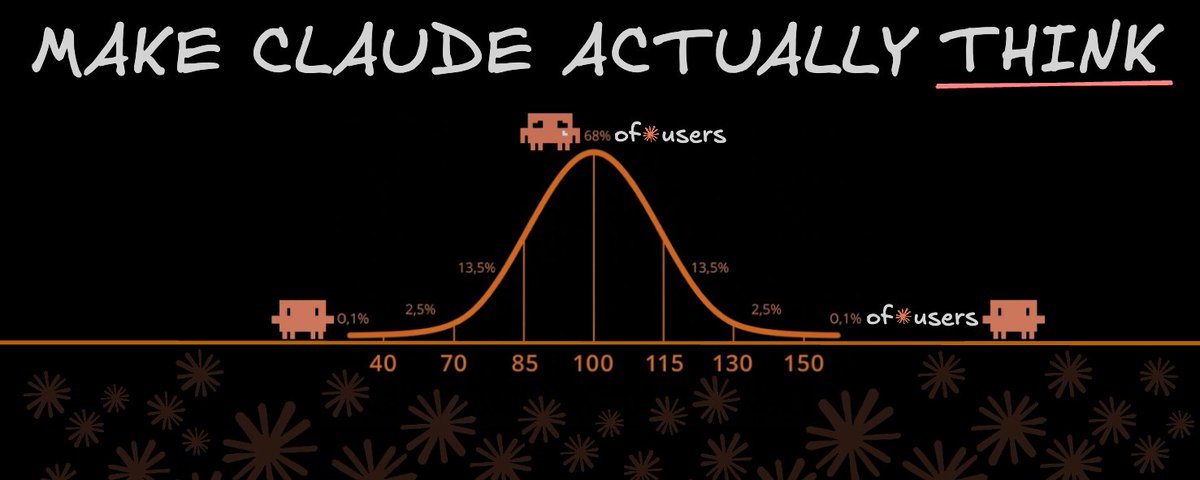
# Claudeはデフォルトで鈍い——1つのファイルがそれを変える
Claudeが文字通り馬鹿のふりをしていると思いませんか?ちゃんと言うことを聞かないし、多くの人がこの問題を無視しているせいでトークンを余計に燃やしています。
GitHubをスクロールしていたら、ゲームを完全に変えるリポジトリを見つけました。
1つのファイル、7日間で4万4千以上の新規スター、そしてClaude Codeを使っているほとんどの人はそれを聞いたこともない。
それが何であるか、なぜ存在するか、そして2分でインストールする方法をお伝えします。
https://github.com/forrestchang/andrej-karpathy-skills
---
OpenAIの共同創業者・元テスラAIディレクターであるAndrej Karpathyは、開発作業のおよそ80%をエージェント駆動に移行しました。
そして彼は、AIコーディングツールが実際にどう振る舞うかについて、問題点をすべて率直に分析した投稿をしました。
3つの引用をゆっくり読んでください。
> 「モデルはあなたに代わって間違った前提を置き、確認もなく突き進んでしまいます。混乱を管理せず、明確化を求めず、矛盾を表面化させず、トレードオフを提示せず、必要な時にも反論しません」
> 「コードとAPIを過剰複雑化し、抽象化を膨らませ、デッドコードを片付けず、100行で済むところを1000行以上の膨張した構造を実装することを好みます」
> 「タスクとは無関係であっても、十分に理解していないコメントやコードを副作用として変更・削除することがいまだにあります」
Claude Codeを使っているすべての開発者がこれを即座に認識しました。
Forrest Changというデベロッパーがその投稿を読んで修正を作りました。1つのCLAUDE.mdファイル、4つの原則——これがClaude Codeがあらゆるタスクでどう振る舞うかを書き換え、今週4万5千人がインストールしました。
---
## 実際に何をするのか
CLAUDE.mdファイルは、Claude Codeがすべてのセッション開始時に自動的に読み込む振る舞い設定ファイルです。その中に書かれていることは何でも、Claudeがプロジェクトについてどう考えるかの一部になります。
このファイルはKarpathyの指摘から直接導き出された4つの原則を追加します。それぞれが特定の悪習慣を修正します。
ファイル全体を今すぐコピーしてください。
```markdown
# CLAUDE.md
Behavioral guidelines to reduce common LLM coding mistakes.
Merge with project-specific instructions as needed.
**Tradeoff:** These guidelines bias toward caution over speed.
For trivial tasks, use judgment.
## 1. Think Before Coding
**Don't assume. Don't hide confusion. Surface tradeoffs.**
Before implementing:
- State your assumptions explicitly. If uncertain, ask.
- If multiple interpretations exist, present them. Don't pick silently.
- If a simpler approach exists, say so. Push back when warranted.
- If something is unclear, stop. Name what's confusing. Ask.
## 2. Simplicity First
**Minimum code that solves the problem. Nothing speculative.**
- No features beyond what was asked.
- No abstractions for single-use code.
- No "flexibility" or "configurability" that wasn't requested.
- No error handling for impossible scenarios.
- If you write 200 lines and it could be 50, rewrite it.
Ask yourself: "Would a senior engineer say this is overcomplicated?"
If yes, simplify.
## 3. Surgical Changes
**Touch only what you must. Clean up only your own mess.**
When editing existing code:
- Don't "improve" adjacent code, comments, or formatting.
- Don't refactor things that aren't broken.
- Match existing style, even if you'd do it differently.
- If you notice unrelated dead code, mention it. Don't delete it.
When your changes create orphans:
- Remove imports/variables/functions that YOUR changes made unused.
- Don't remove pre-existing dead code unless asked.
The test: every changed line should trace directly to the user's request.
## 4. Goal-Driven Execution
**Define success criteria. Loop until verified.**
Transform tasks into verifiable goals:
- "Add validation" → "Write tests for invalid inputs, then make them pass"
- "Fix the bug" → "Write a test that reproduces it, then make it pass"
- "Refactor X" → "Ensure tests pass before and after"
For multi-step tasks, state a brief plan:
1. [Step] → verify: [check]
2. [Step] → verify: [check]
3. [Step] → verify: [check]
Strong success criteria let you loop independently.
Weak criteria ("make it work") require constant clarification.
---
**These guidelines are working if:** fewer unnecessary changes in diffs,
fewer rewrites due to overcomplication, and clarifying questions come
before implementation rather than after mistakes.
```
以上がすべてです。4つの原則、1つのファイル。
---
## 各原則が実際に何を変えるか
### 原則1:コーディング前に考える
**このファイルを使う前:**
```
あなた:「このAPIエンドポイントにキャッシュ層を追加して。」
Claude:[TTL設定、キャッシュ無効化フック、フォールバックロジック、
完全な抽象化レイヤーを含むRedisインテグレーションを構築する]
あなた:「今のところインメモリキャッシュで良かったんだけど。」
```
**このファイルを使った後:**
```
あなた:「このAPIエンドポイントにキャッシュ層を追加して。」
Claude:「始める前に、2つの解釈があります:
1. このセッションのみのインメモリキャッシュ
2. リクエストをまたぐRedisのような永続キャッシュ
どちらですか?キャッシュの無効化は時間ベースですか、手動ですか?」
あなた:「インメモリ、時間ベース、60秒。」
Claude:[まさにそれだけを構築する。それ以上は何もしない。]
```
混乱が作業が始まる前に表面化し、後ではなく前に解決されます。
### 原則2:シンプルファースト
**このファイルを使う前:**
```python
# 「ユーザーが管理者かどうかをチェックする関数」を頼んだ
class UserPermissionManager:
def __init__(self, config=None, cache_ttl=300):
self.config = config or {}
self.cache = {}
self.cache_ttl = cache_ttl
self._permission_registry = defaultdict(list)
def check_permission(self, user_id, permission_type,
context=None, fallback=True):
# さらに47行...
```
**このファイルを使った後:**
```python
# 「ユーザーが管理者かどうかをチェックする関数」を頼んだ
def is_admin(user_id: str) -> bool:
return user_id in ADMIN_USER_IDS
```
ベテランエンジニアが最初のバージョンを過剰複雑と言うか?はい。ならClaudeが書き直します。
### 原則3:外科的変更
**このファイルを使う前**、200行のファイルで1つのバグを修正するよう頼むと、こんなものが返ってきます:
```diff
- def process_order(order_id, user):
+ def process_order(order_id: str, user: User) -> dict:
# null checkのバグを修正
- if order == None:
+ if order is None:
return None
+
+ # 明確さのためにリファクタリング
- x = get_order(order_id)
+ order = get_order(order_id)
- # check user
+ # 処理前にユーザー権限を確認
if not user.can_access(order):
```
nullチェックの修正を頼んだのに、型ヒントを追加し、変数名を変更し、コメントを書き直し、関数シグネチャをリファクタリングしました。
**このファイルを使った後:**
```diff
- if order == None:
+ if order is None:
return None
```
1つの変更。あなたが頼んだものだけ。それ以外は何もなし。
### 原則4:ゴール駆動の実行
これがKarpathyが「鍵となる洞察」と呼んだものです。
> 「LLMは特定のゴールを満たすまでループすることが非常に得意です。何をすべきかを伝えるのではなく、成功基準を与えて動かしましょう。」
**このファイルを使う前:**
```
あなた:「ログインバグを修正して。」
Claude:[変更を加える]
あなた:「直っていない。」
Claude:[また変更を加える]
あなた:「まだ壊れてる。」
Claude:[また変更を加える]
```
**このファイルを使った後:**
```
あなた:「ログインバグを修正して。」
Claude:「プランを示します:
1. バグを再現するテストを書く → 確認: テストが失敗する
2. 根本原因を特定する → 確認: テストが失敗する理由を説明できる
3. 修正を実装する → 確認: テストが通る
4. 他のテストが壊れていないか確認する → 確認: フルスイートがグリーン
始めます。」
[Claudeが4つのチェックすべてが通るまで独立してループする]
[あなたは完成した作業をレビューする]
```
子守をやめて、レビューを始める。
---
## 最も重要な部分:インストール方法
2つの選択肢があります。どちらか1つを選んでください。
**オプションA:プラグイン(すべてのプロジェクトに適用)**
Claude Codeを開いて、次の2つのコマンドを順番に実行します:
```
/plugin marketplace add forrestchang/andrej-karpathy-skills
/plugin install andrej-karpathy-skills@karpathy-skills
```
即時有効。このセッション以降のすべてのプロジェクトで機能します。
**オプションB:プロジェクト単位(1つのリポジトリに配置)**
記事の冒頭に貼ったGitHubリンクのリポジトリで見つけられます。
---
## 自分のルールを上に追加する方法
このファイルはプロジェクト固有の指示とマージするよう設計されています。4つの原則の後に、このようなセクションを追加します:
```markdown
## Project-Specific Guidelines
- Use TypeScript strict mode
- All API endpoints must have integration tests
- Follow error handling patterns in src/utils/errors.ts
- Never commit directly to main
```
プロジェクトルールが4つの原則の上に乗り、両方が適用されます。
---
## 効いているとわかる3つのサイン
即座に気づく3つの変化があります。
**diffがクリーンになります。** 頼んだものだけが表示されます。リフォーマットされた関数なし。リネームされた変数なし。言及していなかったコメントの改善なし。
**明確化の質問が実装前に来るようになります。** Claudeが推測をやめて質問し始めます。間違った作業を捨てる時間が減ります。
**コードが最初からシンプルになります。** 過剰設計されたソリューションのせいでの書き直しなし。Claudeが良いと思ったが誰も頼んでいない抽象化なし。
---
以上です。Leo でした。
CLAUDE.mdclaude-setupclaude-workflowai-thinking
Claudeはデフォルトで鈍い——1つのファイルがそれを変える(Karpathyの指摘から生まれたCLAUDE.md)
25629
原文を表示 / Show original
Defileo
@defileo
Claude is dumb by default, one file changes that
11
143
1.2K
3.3M
Don't you think Claude is literally pretends to be stupid? It doesn't listen to you properly, and many people ignore this so they're burning more tokens.
I've been scrolling on the Github and found the repo that fully changes the game.
One file, 44k+ new stars in seven days, and most people using Claude Code have never heard of it.
Here is what it is, why it exists, and how to install it in two minutes.
🚨 Before we start, me and @noisyb0y1 are launching a completely free AI course, everything you need to go from zero to building real projects with AI in a weekend.
Leaving all details at the end of this article, let's get started:
0:08
https://github.com/forrestchang/andrej-karpathy-skills
Andrej Karpathy, co-founder of OpenAI, former Tesla AI director, shifted to roughly 80% agent-driven development.
Then he posted an honest breakdown of everything that was wrong with how AI coding tools actually behave.
Three quotes read them slowly:
> "The models make wrong assumptions on your behalf and just run along with them without checking. They don't manage their confusion, don't seek clarifications, don't surface inconsistencies, don't present tradeoffs, don't push back when they should"
> "They really like to overcomplicate code and APIs, bloat abstractions, don't clean up dead code. Implement a bloated construction over 1000 lines when 100 would do"
> "They still sometimes change and remove comments and code they don't sufficiently understand as side effects, even if orthogonal to the task"
Every developer using Claude Code recognized this instantly.
A developer named Forrest Chang read the post and built a fix, one CLAUDE.md file, four principles, it rewires how Claude Code behaves on every task and 45,000 people installed it this week.
What it actually does
A CLAUDE.md file is a behavior configuration that Claude Code reads automatically at the start of every session, whatever is in it becomes part of how Claude thinks about your project.
This file adds four principles derived directly from Karpathy's complaints. Each one fixes a specific habit.
Here is the full file, copy it right now.
# CLAUDE.md
Behavioral guidelines to reduce common LLM coding mistakes.
Merge with project-specific instructions as needed.
**Tradeoff:** These guidelines bias toward caution over speed.
For trivial tasks, use judgment.
## 1. Think Before Coding
**Don't assume. Don't hide confusion. Surface tradeoffs.**
Before implementing:
- State your assumptions explicitly. If uncertain, ask.
- If multiple interpretations exist, present them. Don't pick silently.
- If a simpler approach exists, say so. Push back when warranted.
- If something is unclear, stop. Name what's confusing. Ask.
## 2. Simplicity First
**Minimum code that solves the problem. Nothing speculative.**
- No features beyond what was asked.
- No abstractions for single-use code.
- No "flexibility" or "configurability" that wasn't requested.
- No error handling for impossible scenarios.
- If you write 200 lines and it could be 50, rewrite it.
Ask yourself: "Would a senior engineer say this is overcomplicated?"
If yes, simplify.
## 3. Surgical Changes
**Touch only what you must. Clean up only your own mess.**
When editing existing code:
- Don't "improve" adjacent code, comments, or formatting.
- Don't refactor things that aren't broken.
- Match existing style, even if you'd do it differently.
- If you notice unrelated dead code, mention it. Don't delete it.
When your changes create orphans:
- Remove imports/variables/functions that YOUR changes made unused.
- Don't remove pre-existing dead code unless asked.
The test: every changed line should trace directly to the user's request.
## 4. Goal-Driven Execution
**Define success criteria. Loop until verified.**
Transform tasks into verifiable goals:
- "Add validation" → "Write tests for invalid inputs, then make them pass"
- "Fix the bug" → "Write a test that reproduces it, then make it pass"
- "Refactor X" → "Ensure tests pass before and after"
For multi-step tasks, state a brief plan:
1. [Step] → verify: [check]
2. [Step] → verify: [check]
3. [Step] → verify: [check]
Strong success criteria let you loop independently.
Weak criteria ("make it work") require constant clarification.
---
**These guidelines are working if:** fewer unnecessary changes in diffs,
fewer rewrites due to overcomplication, and clarifying questions come
before implementation rather than after mistakes.
That is the whole thing, four principles, one file.
What each principle actually changes
Principle 1: Think Before Coding, before this file:
You: "Add a caching layer to this API endpoint."
Claude: [builds Redis integration with TTL config,
cache invalidation hooks, fallback logic,
and a full abstraction layer]
You: "I just meant in-memory caching for now."
After this file:
You: "Add a caching layer to this API endpoint."
Claude: "Before I start, two interpretations:
1. In-memory cache for this session only
2. Persistent cache like Redis across requests
Which did you mean? Also, should cache
invalidation be time-based or manual?"
You: "In-memory, time-based, 60 seconds."
Claude: [builds exactly that. Nothing else.]
The confusion surfaces before the work happens, not after.
Principle 2: Simplicity First, before this file:
# You asked for: "a function that checks if a user is an admin"
class UserPermissionManager:
def __init__(self, config=None, cache_ttl=300):
self.config = config or {}
self.cache = {}
self.cache_ttl = cache_ttl
self._permission_registry = defaultdict(list)
def check_permission(self, user_id, permission_type,
context=None, fallback=True):
# 47 more lines...
After this file:
# You asked for: "a function that checks if a user is an admin"
def is_admin(user_id: str) -> bool:
return user_id in ADMIN_USER_IDS
Would a senior engineer say the first version is overcomplicated? Yes. So Claude rewrites it.
Principle 3: Surgical Changes
Before this file, you ask Claude to fix one bug in a 200-line file. You get back:
- def process_order(order_id, user):
+ def process_order(order_id: str, user: User) -> dict:
# Fixed the null check bug
- if order == None:
+ if order is None:
return None
+
+ # Refactored for clarity
- x = get_order(order_id)
+ order = get_order(order_id)
- # check user
+ # Validate user permissions before processing
if not user.can_access(order):
You asked it to fix a null check. It added type hints, renamed variables, rewrote comments, and refactored the function signature.
After this file:
- if order == None:
+ if order is None:
return None
One change. The one you asked for. Nothing else.
Principle 4: Goal-Driven Execution
This is the one Karpathy called the key insight.
> "LLMs are exceptionally good at looping until they meet specific goals. Don't tell it what to do. Give it success criteria and watch it go."
Before this file:
You: "Fix the login bug."
Claude: [makes a change]
You: "That didn't fix it."
Claude: [makes another change]
You: "Still broken."
Claude: [makes another change]
After this file:
You: "Fix the login bug."
Claude: "Here is my plan:
1. Write a test that reproduces the bug → verify: test fails
2. Identify root cause → verify: can explain why test fails
3. Implement fix → verify: test passes
4. Check no other tests broke → verify: full suite green
Starting now."
[Claude loops independently until all four checks pass]
[You review finished work]
You stop babysitting -> you start reviewing.
The most important part, How to install it:
Two options, pick one.
Option A: Plugin (installs across all your projects)
> Open Claude Code and run these two commands one after the other:
/plugin marketplace add forrestchang/andrej-karpathy-skills
/plugin install andrej-karpathy-skills@karpathy-skills
Active immediately. Works in every project from this session forward.
Option B: Per-project (drop it into one repo) you can find it in the repo on github link that I left at the start of this article.
How to Add Your Own Rules On Top
The file is designed to be merged with project-specific instructions. After the four principles, add a section like this:
## Project-Specific Guidelines
- Use TypeScript strict mode
- All API endpoints must have integration tests
- Follow error handling patterns in src/utils/errors.ts
- Never commit directly to main
Your project rules sit on top of the four principles, both apply
How you know it is working:
Three things change that you will notice immediately.
Your diffs get cleaner. Only what you asked for shows up. No reformatted functions. No renamed variables. No improved comments you never mentioned.
Clarifying questions come before implementation, claude stops guessing and starts asking. You spend less time throwing away wrong work.
Code is simpler the first time. No rewrites because it overengineered the solution. No abstractions that made sense to Claude but nobody asked for.
Cherry on top for the AI frens:
if you made it this far, you deserve it: a completely free AI course, built for people who actually want to learn.
Leaving a link just below:
> https://www.skool.com/ai-builderss/classroom
More is coming, and it's going to be bigger than anything we've dropped so far stay tuned, grab your spot early, and get ready to fall deep into the AI rabbit hole.
- Leo
Want to publish your own Article?
Upgrade to Premium
4:11 AM · Apr 21, 2026
·
3.3M
Views
11
143
1.2K
7.2K
Read 11 replies