
記事一覧へ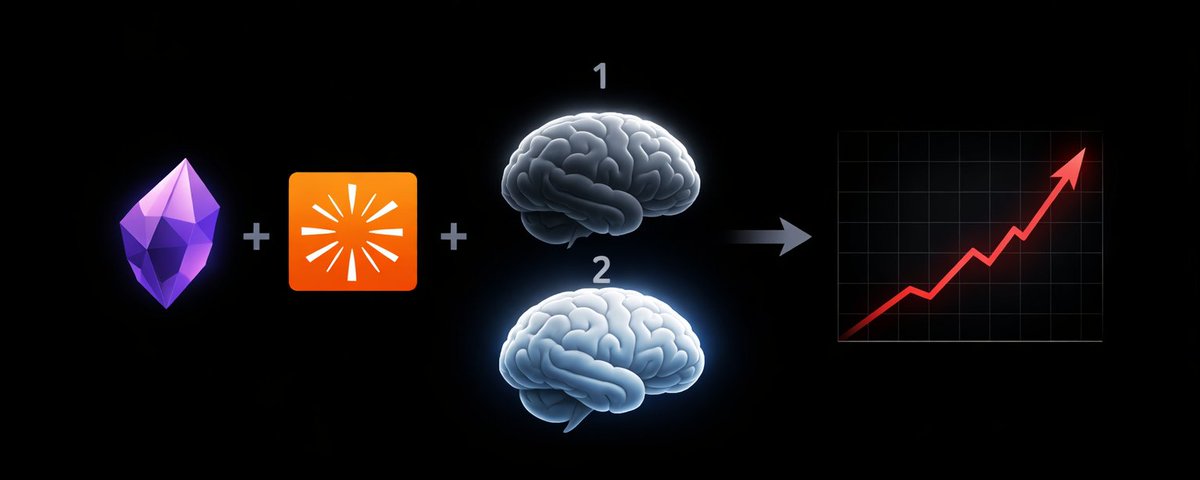
これを構築する方法を教える前に、私のセットアップが何をするかお見せします。
34日間、ファーストドラフトを入力していません。
ツイートも。メールも。Slack メッセージも。このアカウントで公開した最後の3つの記事、先週2.1M ビューを獲得したものを含め、一文も入力していません。
私は話します。Claude が書きます。私の声で。チャットボットの声ではなく。私の声——リズム、癖、「Look,」でいつも段落を始めて、一行で終わる私の書き方。em ダッシュを使いすぎる方法。「leverage」という言葉が嫌いで「utilize」は絶対に使わないというスタイル。
34日後、それは私が自分で入力したドラフトより私に近いです。なぜなら私の入力したドラフトはフィルタリングされているから。私の声はそうではありません。
これはセカンドセルフです。生産性ツールではありません。一言一言自分の口だけで訓練された、あなたの思考方法の作業コピーで、散歩しながら人生のすべての書き物を処理します。
これがどのように機能するか、そして今週の1つの午後でどのように構築できるか、正確にお伝えします。保守的に計算して、年間1,000時間を節約するのに3時間かかります。
## 誰も声→LLM について言わないこと
声を使った口述について書く人全員が的を外しています。
スピードの話だと思っています。「3倍速く入力できる」「1分150ワード vs 40ワード」。技術的には正しいですが、実際には関係ありません。速い入力がアドバンテージなら、法廷速記者が世界を支配しているでしょう。
本当のアドバンテージはこれです:話すとき、自己編集しません。
入力するとき、脳とページの間にフィルターがあります。意見を和らげます。テキストフィールドで見て馬鹿に見えるから半分しか形成されていないアイデアを落とします。終わる前に同じ文を4回書き直します。何かがページに載るころには、もう泥になるまで事前最適化されています。
電話しながら運転中に、歩きながらマイクに向かって、歩き回りながらノートパソコンに向かって話すとき——そのフィルターは消えます。変なことを言います。本当の理由を言います。反論バージョンを言います。全体のポイントであることが判明した余談を追います。
Andrej Karpathy はこれを1年間言い続けています。「How I Use LLMs」のトークで、LLM との会話の約80%が声ベースになったと言いました。Pieter Levels は一日中 Superwhisper を使います。Guillermo Rauch(Vercel CEO)はそれをプライマリの入力として使います。Karpathy は 2025年2月に Superwhisper を通じて Cursor と話しながら「vibe coding」という言葉を作りました。なぜなら声→LLMのループが入力よりもはるかに良くて、別のアクティビティのように感じたからです。
彼らは速く入力するためにやっているのではありません。フィルタリングされていない思考のバージョンがフィルタリングされたバージョンより価値があり、声がそれを完全な忠実度でキャプチャする唯一の方法だからやっています。
そのインサイトを1ステップ前進させてみましょう。生の声がタイプされたバージョンより価値があり、Claude があなたの生の声を読んでそこから洗練されたライティングを作れるなら……
なぜまだ入力しているのですか?
## セカンドセルフとは実際何か
これを正確に定義させてください。なぜなら来月中にあらゆる生産性ブログがそれを混濁させるからです。
セカンドセルフは、あなたのように聞こえる AI ではありません。ChatGPT は300ワードのファインチューニング後にそれをできます。退屈です。
セカンドセルフは積み重なった3つのものです:
**1. 完璧なキャプチャレイヤー**。すべての声メモ、すべての歩きながらの話し合い、すべてのシャワーでのランダムな考え、すべての即興のLoom が1つのフォルダに検索可能なテキストとして入ります。「ほとんど」ではありません。すべてです。自動的に。ゼロ摩擦で——摩擦があればやめてしまい、すべてが崩壊します。
**2. あなたのスタイルモデル**。カジュアルなトーンで書くよう言うプロンプトではありません。Claude が毎回の生成前に読む実際のドキュメント:あなたが書いた文の40の例、絶対に書かない20の文、リズムのルール、使わない語彙、常に使う構造的な動き。これを CLAUDE.md として考えてください、でもあなたの個性のために。
**3. ルーティングシステム**。Claude は各声キャプチャの思考が実際に何なのかを決定します——ツイート、記事の下書き、メール返信、後でファイルする決定、未来の自分へのタスク、特定のプロジェクトへのメモ——そして正しい場所に送ります。単一のアウトプットではありません。ディスパッチャーです。
3つを積み重ねると、最初の週は本当に不安になるものが得られます。
ブロックを一周歩き回りながらアイデアについて話します。デスクに戻るころには、下書きフォルダにドラフトツイートがあり、取り組んでいる記事に2つの箇条書きが追加され、クライアントの名前の下にリマインダーが入れられ、週次レビューに決定がログされています——全部あなたの声で、キーボードに触れることなく。
最初に起きたとき、1分間画面を見つめました。動きませんでした。ChatGPT が最初に本当の質問に答えたときと同じ感覚でした。「ああ、何かが変わった」という感覚です。
## 3時間で構築する方法
3つのピース。どれも難しくありません。
### ピース1:キャプチャレイヤー(15分)
Superwhisper(Mac)または Wispr Flow(Mac/Windows)をダウンロードしてください。どちらでも。私は Karpathy が使うから Superwhisper を使っています。自分より賢い人のコピーを恥じません。
https://superwhisper.com
グローバルホットキーを設定してください。私は右オプションキーを使います。押しながら話して、放す。どのアプリを使っていても、テキストがカーソル位置に落ちます。Claude Code でも、空の .txt ファイルでも、ブラウザのアドレスバーでも(人生をカオスパイロットしたいなら)。
**重要な設定**:Super Mode をオンにして、LLM を Claude Sonnet か Haiku に設定してください。これが、フィラーワードを取り除き、文法を修正し、ページに届く前にアウトプットを軽くタッチします。生のトランスクリプションは望みません——クリーンアップされたあなたが欲しいです。
でも過度にクリーンにしないで。Superwhisper のカスタムモードプロンプトに、これを貼り付けてください:
```
あなたは声の口述をクリーンアップしています。あなたの仕事は:
- 「えーと」「あー」、言い直し、繰り返された言葉を削除する
- 明らかな文法ミスを修正する
- すべての意見、すべての個性、すべての余談を残す
- 話し手の正確な語彙とリズムを保つ
- ライティングのために書き直さない。より専門的に聞こえるようにしない。
- em ダッシュを絶対に削除しない。箇条書きを追加しない。
改善したくなったら止めてください。それはあなたの仕事ではありません。
```
最後の段落はこの記事の他のどんな部分よりも重要です。すべての声ツールのデフォルト動作は、あなたを LinkedIn の投稿のように聞こえさせることです。それが敵です。あなたを捉えようとしています。あなたの磨かれたバージョンではなく。
### ピース2:スタイルモデル(1時間——唯一の難しい部分)
ここで人々はやめます。やめないでください。
フォルダを作ってください:~/brain/。その中にファイルを作ってください:voice.md。
次に、最も誇りに思う10の作品を見つけてください。ツイート、メール、記事のイントロ、何でも。ファイルに貼り付けてください。次に下にこのようなセクションを書いてください:
```markdown
# 私の書き方
## 私が書く文
- [実際の文を15〜20個貼り付け]
## 私が絶対に書かない文
- 「活用する」 — 「使う」と言う
- 動詞としての「レバレッジ」 — 絶対に
- 「深く掘り下げる」 — 即削除
- 「重要なのは」 — ただその話をする
- [自分自身のリスト、残酷に、15以上]
## リズムのルール
- 短い文。短い文。次に息ができる長い文。
- 段落を積極的に分ける。1行の段落はOK。
- 散文の中では箇条書きを使わない。リストはリスト用。
- 前置きではなく衝撃で始める。
## 構造的なクセ
- セクションを主張で始め、それを証明する
- 可能な限り具体的な数字を使う
- 名前を挙げる
- サマリーではなくパンチで終わる
```
そして——ほとんどの人が見逃すこの動き——Claude を開いて、あなたの10の最高の作品を貼り付けて言ってください:「これらを読んで、私が書き留めなかった30以上の声のルールを書いてください。具体的に。文を指してください。」
Claude はあなたが自分自身について書いたことのない、自分のライティングに関する30のルールを与えます。貼り付けてください。これがあなたの実際のスタイルモデルです。なぜなら自分の声について自分で書くことよりも外からの読み手がよく見える盲点があるから、それ(Claude)が見えるものの方が良いです。
voice.md は400〜800ワードにすべきです。それ以上は悪化します。
### ピース3:ディスパッチャー(1時間)
Claude Code をインストールしてください。~/brain/ フォルダを指定してください。これがセカンドセルフの基地です。
3つのサブフォルダを作ってください:
```
~/brain/
├── voice.md
├── inbox/ ← すべての生の声キャプチャがここに入る
├── drafts/ ← 洗練されたアウトプット、タイプ別にルーティング
│ ├── tweets/
│ ├── articles/
│ ├── emails/
│ └── notes/
└── log.md ← 何が起きたかの追記のみのレコード
```
次にディスパッチャー。これを ~/brain/.claude/commands/dispatch.md として保存してください:
```
/brain/inbox/ にあるすべての新しいファイルを読んでください。
各ファイルについて:
1. まず /brain/voice.md を読んでください。これは交渉不可能です。
2. この声メモが実際に何かを把握してください。カテゴリ:
- TWEET(単一の観察、1〜280文字、パンチで終わる)
- THREAD(構築する複数の関連ポイント)
- ARTICLE SEED(記事になりたい長いランティング)
- EMAIL(特定の人に向けられた——名前を確認)
- NOTE(ただ考えているだけ、後のためにファイル、アウトプット不要)
- DECISION(決めたこと——/brain/log.md に日付で記録)
3. voice.md スタイルでアウトプットを作成。デフォルトLLMスタイルではなく。
「深く掘り下げる」というフレーズを書いたら見つけ出します。
4. アウトプットを /brain/drafts/ の正しいサブフォルダにルーティングしてください。
5. タイムスタンプ、ソースファイル、カテゴリ、送り先で /brain/log.md にエントリを追加。
6. 処理されたファイルを /brain/inbox/processed/ に移動してください。
すべてこれを1回のパスで行ってください。質問しないでください。何かが曖昧なら、判断してログに記録してください。
```
以下で実行してください:
```bash
claude -p "/dispatch" --allowedTools Read,Write,Edit,Bash
```
または Claude Code の /schedule コマンドを使って15分ごとに発火するようスケジュールしてください(v2.1.72 で出荷——なければ更新してください)。これで声メモがほぼリアルタイムで処理されます。ターミナルを開くことなく。
それがシステム全体です。3つのピース。1つの午後。複利はすぐに始まります。
## 30日後の実際の感覚
**1週目**はぎこちない。Claude はあなたの声を70%正確にします。すべてを手作業で編集します。何がうまくいかなかったかに基づいて voice.md にルールを追加します。スマートな子犬を訓練しているような感じです。
**2週目**、何かが変わります。ツイートを手作業で編集するのをやめたことに気づきます。見て、投稿する。声が正しいです。
**3週目**、自分自身にもっと話すようになっていることに気づきます。散歩中。車の中で。行列の中で待っているとき。なぜなら口に出すすべてのアイデアが何かになるから——下書き、ファイル、決定——そして口に出さないすべてのアイデアは消えてしまうから。報酬ループがあなたを再プログラムします。アイデアを忘れる人ではなく、アイデアを話す人になります。
**4週目**、不思議な部分。Claude の下書きを開いて、自分が書いたのか書かれたのかわからなくなります。両方だから。あなた自身——でも自己編集せず、曖昧にせず、薄めていないバージョン。フィルターが入る前の3秒間だけ頭の中にあるバージョン。
そのバージョンのあなたは、入力されたバージョンよりはるかに良い書き手です。これが私を混乱させた部分です。
私は常に入力したバージョンが本当の自分で、声は雑然とした最初のパスだと思っていました。逆でした。入力したバージョンは、実際に思っていることと文書として残せるものとの間の妥協です。声は実際に思っていることです。Claude が声から書くとき、悪いドラフトを得ているのではありません——妥協の少ないドラフトを得ています。曖昧さと和らげは改善ではありませんでした。防御でした。
それが声を上げて言う必要があること。なぜなら生産性界隈の誰もそれを言っていないから:
**これは速く書くことについてではありません。より正直に書くことについてです。**
入力はキーボードを発明したとき設置されたフィルターです。比較するものがなかったから、それがフィルターだとわからなかったのです。今わかります。声+スタイルモデル+ディスパッチャーは、手が口に追いつけていたなら紙に書く思考が常にそうなっていたものです。
## 注意すべき点、今夜すべきこと
このウィンドウはおそらく6ヶ月です。
Anthropic は Claude に直接ネイティブ声キャプチャを搭載するでしょう。すべての AI ラボもそうします。それが起きると、エッジは縮まります——技術が良くなるからではなく、みんながそれを持つからです。今エッジがあるのは(a)3つのツールをつなぐ必要があり(b)voice.md を構築する必要があるからです。ほとんど誰も自分の声を文書化するのに1時間を費やしません。それが次の2四半期のあなたのモートです。
このタブを閉じる前にすべきこと:
**今夜**:Superwhisper をダウンロードしてください。ホットキーを設定してください。空のテキストファイルに5分間、何かについて話してください。キーボードフィルターなしで脳がページに届く感覚を感じてください。
**今週末**:voice.md を構築してください。1時間。Claude があなたの最高の作品を読んで自分についての30のルールを伝えるステップをスキップしないでください。そのステップがすべてです。
**来週**:ディスパッチャーをつなぎましょう。1日1回手動で実行してください。編集なしで投稿できる下書きを出すまで自動化しないでください。
**2ヶ月目**:公開した投稿のうちどれだけがキーボードに触れなかったかを追跡し始めましょう。私は今90%以上です。あなたもそうなるでしょう。
そして、この記事を1人の人に送ってください——アイデアを持っていても決して書き留めない友人に。彼らがこれを最も必要としており、自分では見つけられません。
2026年にセカンドセルフを構築した人々は、3倍生産的に見えません。まったく別の種類の脳を持っているように見えるでしょう。
なぜなら、そうなるから。
だからこそ、これは違法であるべきです。
claude-workflowmarketingai-thinking
Claude×音声入力で34日間ドラフト入力ゼロ
17828
原文を表示 / Show original
I'm going to show you what my setup does before I tell you how to build it.
I haven't typed a first draft in 34 days.
Not a tweet. Not an email. Not a Slack message. Not a single sentence of the last three articles I published on this account, including the one that got 2.1M views last week.
I talk. Claude writes. In my voice. Not a chatbot voice. My voice the rhythm, the tics, the way I always start paragraphs with "Look," and end them with a one-liner. The way I over-use em-dashes. The way I hate the word "leverage" and refuse to say "utilize."
After 34 days, it's closer to me than my own typed drafts. Because my typed drafts are filtered. My voice isn't.
This is a second self. Not a productivity tool. A working copy of how you think, trained on nothing but your own mouth, that handles every piece of written output in your life while you go for a walk.
Here's exactly how it works, and how you can build it in one afternoon this week. It will take you 3 hours to save you, conservatively, 1,000 hours a year.
The one thing nobody tells you about voice → LLM
Everyone writing about voice dictation is missing the point.
They think it's about speed. "Type 3x faster." "150 words per minute vs. 40." Technically true, practically irrelevant. If faster typing was the edge, court reporters would rule the earth.
The real edge is this: when you talk, you don't self-edit.
When you type, there's a filter between your brain and the page. You soften takes. You drop half-formed ideas because they look dumb in a text field. You rewrite the same sentence four times before you even finish it. By the time something hits the page, it's been pre-optimized into mush.
When you talk — into a phone while driving, into a mic while walking, into your laptop while pacing — that filter is gone. You say the weird thing. You say the actual reason. You say the contrarian version. You follow the tangent that turns out to be the whole point.
Andrej Karpathy has been saying this for a year. In his "How I Use LLMs" talk, he said that roughly 80% of his interactions with LLMs are now voice-based. Pieter Levels uses Superwhisper all day. Guillermo Rauch (Vercel CEO) uses it as his primary input. Karpathy literally coined the term "vibe coding" in February 2025 while talking to Cursor through Superwhisper, because the voice → LLM loop was so much better than typing that it felt like a different activity.
None of them are doing it to type faster. They're doing it because the unfiltered version of their thinking is more valuable than the filtered version, and voice is the only way to capture it at full fidelity.
Now take that insight and run it forward one step. If your raw voice is more valuable than your typed version, and Claude can read your raw voice and produce polished writing from it…
Why are you still typing?
What a second self actually is
Let me define this precisely, because every productivity-bro blog is going to muddy it within a month.
A second self is not an AI that sounds like you. ChatGPT can do that after 300 words of fine-tuning. Boring.
A second self is three things stacked:
1. A perfect capture layer. Every voice memo, every walk-and-talk, every shower-thought rant, every off-the-cuff Loom ends up as searchable text in one folder. Not "most of them." All of them. Automatically. With zero friction — if there's friction, you stop doing it, and the whole thing collapses.
2. A style model of you. Not a prompt that says "write in a casual tone." An actual document that Claude reads before every generation, containing: 40 examples of sentences you've written, 20 sentences you'd never write, your rhythm rules, your vocabulary bans, the structural moves you always make. Think of it as a CLAUDE.md, but for your personality.
3. A routing system. Claude decides what each piece of voice-captured thinking actually is — a tweet, an article draft, an email reply, a decision to file, a task for future-you, a note for a specific project — and sends it to the right place. Not a single output. A dispatcher.
Stack all three and you get something that feels genuinely unnerving the first week you use it.
You walk around the block talking about an idea. By the time you get back to your desk, there's a draft tweet in your drafts folder, two bullet points added to an article you're working on, a reminder filed under a client's name, and one decision logged to your weekly review — all in your voice, all without you touching a keyboard.
The first time it happened I stared at my screen for a full minute. I didn't move. It was the same feeling as the first time ChatGPT answered a real question. That "oh, something just changed" feeling.
How to build it in 3 hours
Three pieces. None of them hard.
Piece 1: The capture layer (15 minutes)
Download Superwhisper (Mac) or Wispr Flow (Mac/Windows). Either one. I use Superwhisper because Karpathy does and I am not above copying people smarter than me.
https://superwhisper.com
Set a global hotkey. I use Right Option. Hold it, talk, release. Whatever app you're in, the text drops into the cursor position. Works in Claude Code, works in a blank .txt file, works in the address bar of your browser if you want to chaos-pilot your life.
Critical setting: turn on Super Mode, and set the LLM to Claude Sonnet or Haiku. This strips filler words, fixes grammar, and light-touches the output before it hits the page. You don't want raw transcription — you want cleaned-up you.
But don't over-clean it. In Superwhisper's custom mode prompt, paste this:
You are cleaning up voice dictation. Your job is to:
- Remove "um", "uh", false starts, and repeated words
- Fix obvious grammar mistakes
- Keep every opinion, every piece of personality, every aside
- Keep the speaker's exact word choices and rhythm
- NEVER rewrite for clarity. NEVER make it sound more professional.
- NEVER remove an em-dash. NEVER add a bullet point.
If you are tempted to improve the writing, stop. This is not your job.
That last paragraph matters more than anything else in this article. The default behavior of every voice tool is to make you sound like a LinkedIn post. That's the enemy. You're trying to capture you, not a polished version of you.
Piece 2: The style model (1 hour — the only hard part)
This is where people bounce. Don't bounce.
Create a folder: ~/brain/. Inside it, create a file: voice.md.
Now go find the 10 pieces of writing you're proudest of. Tweets, emails, article intros, whatever. Paste them into the file. Then write a short section underneath that looks like this:
# How I write
## Sentences I would write
- [paste 15-20 actual sentences of yours]
## Sentences I would never write
- "Utilize" - I say "use"
- "Leverage" as a verb - never
- "Delve into" - immediate delete
- "It's important to note that" - just say the thing
- [add your own list, be brutal, 15+ of these]
## Rhythm rules
- Short sentence. Short sentence. Then a longer one that breathes.
- I break paragraphs aggressively. One-line paragraphs are fine.
- I never use bullet points inside prose. Lists are for lists.
- I open with a jolt, not a throat-clear.
## Structural tics
- I start sections with an assertion, then prove it
- I use specific numbers whenever possible
- I name names
- I end with a punch, not a summary
Now — and this is the move most people miss — open Claude and paste your 10 best pieces and say: "Read these and write 30 more voice rules I didn't think to write down. Be specific. Point to sentences."
Claude will give you 30 rules about your own writing that you've never articulated. Paste them in. This is your actual style model. It's better than anything you'd write about yourself because you have blind spots about your own voice that only an outside reader can see.
Your voice.md should be 400-800 words. Not longer. Longer is worse.
Piece 3: The dispatcher (1 hour)
Install Claude Code. Point it at your ~/brain/ folder. This is your second self's home base.
Create three sub-folders:
~/brain/
├── voice.md
├── inbox/ ← every raw voice capture lands here
├── drafts/ ← polished outputs, routed by type
│ ├── tweets/
│ ├── articles/
│ ├── emails/
│ └── notes/
└── log.md ← append-only record of what happened
Now the dispatcher. Save this as ~/brain/.claude/commands/dispatch.md:
Read every new file in /brain/inbox/.
For each file:
1. Read /brain/voice.md first. This is non-negotiable.
2. Figure out what this voice note actually is. Categories:
- TWEET (a single observation, 1-280 chars, ends with a punch)
- THREAD (multiple connected points that build)
- ARTICLE SEED (a long rant that wants to become a piece)
- EMAIL (directed at a specific person — check for names)
- NOTE (just thinking, file for later, no output needed)
- DECISION (something I decided — log it in /brain/log.md with date)
3. Produce the output in voice.md style. NOT in default-LLM style.
If you write the phrase "delve into" I will find you.
4. Route the output to the right subfolder in /brain/drafts/.
5. Append an entry to /brain/log.md with timestamp, source file,
category, and destination.
6. Move the processed file to /brain/inbox/processed/.
Do all of this in one pass. Do not ask me questions. If something
is ambiguous, make a call and note it in the log.
Run it with:
bash
claude -p "/dispatch" --allowedTools Read,Write,Edit,Bash
Or schedule it to fire every 15 minutes using Claude Code's /schedule command (shipped in v2.1.72 — if you don't have it, update). Now your voice notes get processed in near-real-time, without you ever opening a terminal.
That's the whole system. Three pieces. One afternoon. The compounding starts immediately.
What this actually feels like after 30 days
Week 1 is clunky. Claude gets your voice 70% right. You hand-edit everything. You add rules to voice.md based on what it got wrong. It feels like training a puppy that's almost as smart as you.
Week 2, something shifts. You realize you've stopped hand-editing the tweets. You skim, hit post. The voice is right.
Week 3, you notice you're talking to yourself more. On walks. In the car. Waiting in line. Because every idea you say out loud turns into something — a draft, a file, a decision — and every idea you don't say out loud disappears. The reward loop rewires you. You become an idea-speaker instead of an idea-forgetter.
Week 4, the weird part. You open one of Claude's drafts and you can't remember if you wrote it or it wrote it. Because it's both. It's you — but the version of you that didn't self-edit, didn't hedge, didn't water it down. The version of you that exists in your head for 3 seconds before the filter kicks in.
That version of you is a much better writer than the typed version. This is the part that messed me up.
I had always assumed the typed version was the real me, and voice was the sloppy first pass. It's the opposite. The typed version is a compromise between what I actually think and what I'm willing to commit to in writing. Voice is what I actually think. When Claude writes from voice, I'm not getting a worse draft — I'm getting a less-compromised draft. The hedges and softenings were never improvements. They were defenses.
Which leads to the thing I need to say out loud, because no one in the productivity space is saying it:
This is not about writing faster. It's about writing more honestly.
Typing is a filter that was installed when we invented the keyboard. We didn't know it was a filter because we had nothing to compare it to. Now we do. Voice + a style model + a dispatcher is what thinking-on-paper would have always looked like if our hands could keep up with our mouths.
What to watch for, what to do tonight
The window on this is maybe 6 months.
Anthropic is going to ship native voice capture directly into Claude. Every AI lab is. When that happens, the edge shrinks — not because the tech gets better, but because everyone has it. Right now the edge exists because (a) you need to wire three tools together and (b) you need to build voice.md, and almost nobody is going to spend an hour documenting their own voice. That's your moat for the next two quarters.
Here's what to do before you close this tab:
Tonight: Download Superwhisper. Set the hotkey. Talk into a blank text file for 5 minutes about anything. Feel what it's like to have your brain hit the page without the keyboard filter.
This weekend: Build voice.md. One hour. Don't skip the step where Claude reads your best writing and tells you 30 rules about yourself. That step is the whole thing.
Next week: Wire up the dispatcher. Run it once a day manually. Don't automate it until it's producing drafts you're willing to post without edits.
Month two: Start tracking how many of your published posts never touched your keyboard. Mine is now above 90%. Yours will be too.
And then, send this article to one person — the one friend you have who is drowning in ideas they never write down. They are the person who needs this most, and they will not find it on their own.
The people who build a second self in 2026 are not going to look 3x more productive. They're going to look like they have a completely different kind of brain.
Because they will.
That's why it should be illegal.
この記事から生まれた Sift プラクティス
AIFCC Sift — AI最新ニュースから厳選したプラクティス集に、この記事のエッセンスが反映されています。
- Claude×音声入力でドラフト入力ゼロclaude-workflow