
記事一覧へ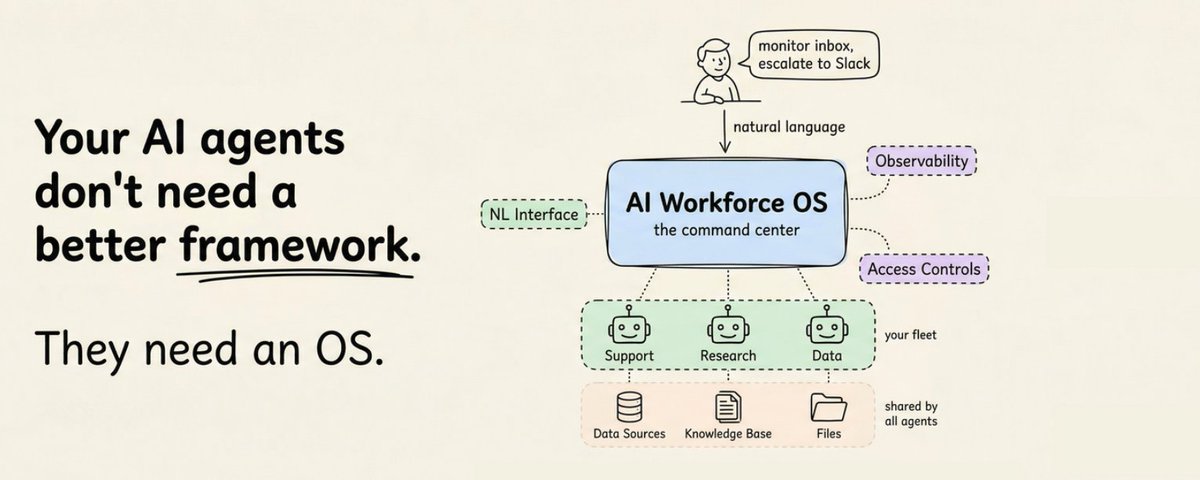
AIワークフォースの OS を構築する方法
AIエージェントのフリートを管理するためになぜOSレイヤーが必要なのか、そしてそのレイヤーが実際に何をすべきかについての、ファーストプリンシプルに基づく考察です。
私たちは過去2年間、個々のAIエージェントを構築することに習熟してきました。しかしもはや個別エージェントの構築自体は難しい時代ではありません。難しいのは、ガバナンスが効き、可観測性があり、ビジネスにとって実際に価値のある形で、複数のエージェントをスケールさせながら連携して動かすことです。
## AIエージェントツールの現状
既存のソリューションは3つのカテゴリに分類されます:
**ワークフロービルダー**(n8n、Dify、Flowise)はプロトタイピングには優れています。しかし、複雑なマルチエージェント連携、動的タスク割り当て、エンタープライズレベルのアクセス制御、監査証跡などの機能が欠如しています。
**コードファーストフレームワーク**(LangChain、CrewAI、AutoGen)はパワフルですが、保守上の課題を生み出します。複雑度が増すにつれて、抽象化がむしろ足かせになってきます。
**個人向けAIアシスタント**は個別タスクをうまく処理しますが、共通の目標に向けて働く専門エージェントを連携させることは想定して設計されていません。
## 根本的な問題
既存のすべてのツールが解決しているのは「構築」であり、「運用」ではありません。これらのツールは、単一のガバナンス構造のもとでエージェントのフリートを管理すること、自然言語でタスクを割り当てること、エージェント間で共有状態を維持することができません。
こう考えてみてください:私たちには個々のプログラムを作るための優れたツールがあります。しかし、それらすべてを動かすオペレーティングシステムは存在しません。
## OS に求められる機能
AIエージェント向けオペレーティングシステムは以下を提供すべきです:
- エージェントの作成・指示のための自然言語コマンドインターフェース
- ナレッジベースとツール全体にわたる統合リソース管理
- 完全な実行可観測性と監査証跡
- エンタープライズレベルのアクセス制御とパーミッション
- データセキュリティのためのセルフホスティング機能
## 既存フレームワークでは不十分な理由
フレームワークは間違った問題を解こうとしています。フレームワークは1つのエージェントを構築するのを助けます。OS は50のエージェントを動かすのを助けます。
この違いはコンパイラとオペレーティングシステムの違いに似ています。コンパイラはコードをプログラムに変えます。OS はすべてのプログラムを管理し、その間でリソースを共有させ、互いに干渉しないようにします。
## OS レイヤーが実際に担うこと
1. **エージェントライフサイクル管理** — 統一インターフェースからエージェントの作成、デプロイ、監視、一時停止、廃止を実行する
2. **リソース共有** — エージェントが状態を複製することなく、ナレッジベース、ツール、コンテキストを共有できるようにする
3. **タスクルーティング** — 能力に基づいて適切なエージェントへの自然言語タスク割り当てを実現する
4. **ガバナンス** — 誰がエージェントを作れるか、何にアクセスできるか、何を許可するかを定義する
5. **可観測性** — すべての意思決定、アクション、結果の完全な監査証跡を確保する
## 戦略的な意味合い
このアプローチはエージェントを、個別スクリプトから役割と監督体制を持つ管理された作業者へと変革します。非技術系のステークホルダーが参加できるようになり、エンタープライズガバナンスが後付けではなく最初から実現可能なものになります。
インフラの成熟度こそが、モデルの能力ではなく、実際の普及のボトルネックです。OSレイヤーを最初に構築するチームが、エージェント機能が向上し続ける中で最強のポジションを確立することになります。
claude-workflowagent-opsai-industry
AIワークフォース用OSの構築方法
4276388541,648
原文を表示 / Show original
How to Build an OS for Your AI Workforce?
A first-principles look at why managing a fleet of AI agents requires an OS layer, not a better framework, and what that layer actually needs to do.
We've spent two years getting really good at building individual AI agents. But building agents is not the hard part anymore. The hard part is running them together at scale, in a way that's governed, observable, and actually useful to a business.
Current State of AI Agent Tools
Existing solutions fall into three categories:
Workflow builders (n8n, Dify, Flowise) excel at prototyping but lack capabilities for complex multi-agent coordination, dynamic task assignment, enterprise access controls, and audit trails.
Code-first frameworks (LangChain, CrewAI, AutoGen) offer power but create maintenance challenges. As complexity grows, the abstraction starts working against you.
Personal AI assistants handle individual tasks well but weren't designed for coordinating specialized agents working toward shared objectives.
The Core Problem
All existing tools address construction, not operations. They cannot manage fleets of agents unified under a single governance structure, assign work through natural language, or maintain shared state across agents.
Think of it this way: we have great tools for building individual programs, but no operating system to run them on.
Required OS Capabilities
An AI agent operating system should provide:
- Natural language command interfaces for creating and directing agents
- Unified resource management across knowledge bases and tools
- Complete execution observability and audit trails
- Enterprise access controls and permissions
- Self-hosting capabilities for data security
Why Not Just Use an Existing Framework?
Frameworks solve the wrong problem. They help you build one agent. An OS helps you run fifty.
The difference is like the difference between a compiler and an operating system. A compiler turns code into a program. An OS manages all the programs, shares resources between them, and keeps them from stepping on each other.
What the OS Layer Actually Does
1. Agent Lifecycle Management - Create, deploy, monitor, pause, and retire agents through a unified interface
2. Resource Sharing - Agents share knowledge bases, tools, and context without duplicating state
3. Task Routing - Natural language task assignment to the right agent based on capabilities
4. Governance - Who can create agents, what can they access, what are they allowed to do
5. Observability - Complete audit trail of every decision, action, and outcome
Strategic Implications
This approach transforms agents from individual scripts into managed workers with roles and oversight. It enables non-technical stakeholders to participate and makes enterprise governance tractable rather than bolted-on afterward.
Infrastructure maturity — not model capability — is the actual adoption bottleneck. The teams that build the OS layer first will have the strongest position as agent capabilities continue to improve.