
記事一覧へ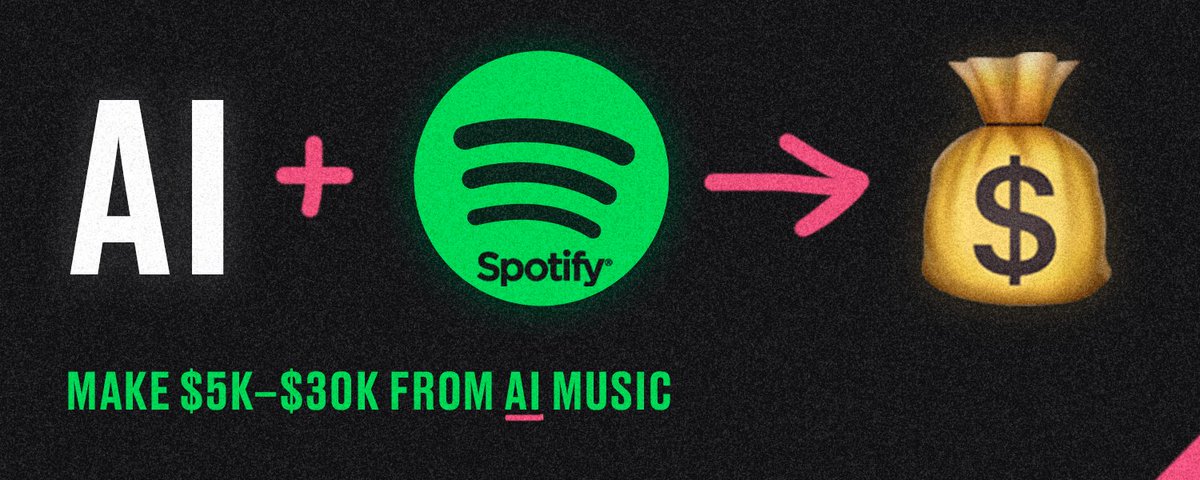
これを読んでいるなら、おそらくすでに可能だと直感しているはずだ。
AIが生成したアーティストが何百万回もストリーミングされているTikTokを見ただろう。「AIでお金を稼ぐ」動画が本物かただの詐欺なのか疑問に思っただろう。
短い答えはこうだ:一部は本物だ。
Telisha Jonesは31歳。音楽の訓練を受けたことがなく、業界のコネクションもなく、月10ドルのAIサブスクリプションしかなかった。1年後、彼女は300万ドルの契約を結んだ。
そして彼女だけではない。音楽の素養が全くない普通の人たちが、同じことをして月5,000〜30,000ドルを稼いでいる。
その方法を紹介する。
セットアップはシンプルだ。月10ドルのAI音楽ツール。Spotifyで公開するために年間23ドル。誰も争っていないニッチ。詳細は後ほど。
しかしまず、まさにそのセットアップで一人の人物がやったことを見てみよう。
**10ドルが300万ドルになるまで**
Telisha Jonesは31歳。2024年まで、一度も曲をリリースしたことがなかった。
詩を書いていた彼女は、テキストプロンプトを30秒で完成したトラックに変えるAI音楽ツール「Suno」のサブスクリプションに月10ドルを支払った。詩を歌詞として入力し、R&Bとゴスペルを選び、ボーカルと制作はAIに任せた。
そして「Xania Monet」という名のペルソナでSpotifyに楽曲をアップロードした。
アーティストはAIだ。300万ドルの契約は違う。
その後に起きたことは音楽業界のあらゆるルールを破った。
「How Was I Supposed to Know」はSpotifyで1,300万回再生を記録した。Xania MonetはBillboardゴスペルチャートで3位に入り、BillboardのラジオランキングにチャートインしたAI生成アーティスト第1号になった。5曲の楽曲が2ヶ月で推定52,000ドルのロイヤリティを生み出した。
Hallwood Mediaは300万ドルで彼女を契約した。
オーディションで彼女はカメラをオンにしなかった。
以上。それがすべての話だ。
Telishaはカーブのトップだ。300万ドルの契約は例外だ。
その下で、何百人もの普通の人たちが同じことをしている。レコード契約もない。Billboardチャートも関係ない。ただ毎月、静かに収入が入ってくる。
**普通の人たち、本物のお金**
Redditの匿名クリエイターは収益の内訳を公開した。80曲のAI生成ローファイ・瞑想トラックのカタログから、月5,000ドルのSpotifyロイヤリティ。
James 99というペンネームのMediumライターは収入の完全な内訳を発表した。SpotifyとApple Musicでのロイヤリティから4ヶ月で合計30,000ドル。彼の戦略は地味だ。睡眠音楽。勉強音楽。集中プレイリスト。
3人目のクリエイターは、異なるアーティスト名で週に10〜20曲をアップロードする。ロイヤリティは平均で1日200ドル。一つのトラックが話題になると、同様のものをさらに作る。ならなければ、次に進む。
三人とも業界のコネクションがなかった。スタジオもなかった。ニッチを選び、週に4〜5曲の新しいトラックをリリースし、Spotifyのアルゴリズムに任せた。
**実際の仕組み**
**ツール**。このコンテンツのほぼすべてのストーリーの背後にあるAI音楽ジェネレーターがSunoだ。
Proプランは月10ドル。テキストプロンプトを与えると:
```
「勉強用のアップビートなローファイ、優しいピアノ、ソフトなドラム」
```
30秒後にはボーカル、楽器、ミキシングが完了した完成トラックが手に入る。Proプランには商業権も含まれており、これがすべてを合法的に収益化できる根拠だ。
**ディストリビューター**。SpotifyはランダムなユーザーがSong直接アップロードすることを許可していない。ディストリビューターが必要だ。DistroKidは年間23ドルで無制限にアップロードできる。Spotify、Apple Music、Amazon Music、YouTube Music、その他150以上のプラットフォームにトラックを配信する。ロイヤリティは100%維持できる。
**ニッチ**。AI生成のポップヒット曲でSpotifyを制しようとしている人はいない。お金はリアルミュージシャンが無視するニッチにある——睡眠音楽、勉強音楽、瞑想、ローファイ、アンビエント、ホワイトノイズ、集中プレイリスト、ゴスペル。これらは人々が何時間もパッシブにストリーミングし、再生ごとにロイヤリティを生み出すカテゴリだ。音楽業界と競合しているのではない。数人の他のAIクリエイターと競合しているだけだ。
**ボリューム**。完璧な一曲がゲームではない。ゲームは、週に10〜20の新しいトラックをいくつかの異なるアーティスト名でリリースし、アルゴリズムがどれを拾い上げるかを見て、うまくいくものを倍増することだ。
Spotifyのアルゴリズムは継続性に報いる。個々のトラック品質が似ていても、80曲のカタログは8曲のカタログより稼ぐ。
**最後に一つ**
Spotifyは2025年に7,500万のAIトラックを削除した。Sunoは大手レーベルに訴えられており、その訴訟が合法の範囲を再定義する可能性がある。
それでも流れは止まっていない。しかし、ウィンドウは閉じている。今稼いでいるクリエイターは1年前に始めた。
あなたはプレイブック全体を手に入れた。ツール、ディストリビューター、ニッチ、ボリューム。Spotifyで月5,000ドルを稼いでいる人たちは、今のあなたより少ないものでスタートした。
次の1年をAI音楽が大きくなるのを見て過ごすこともできる。またはセットアップを実行して過ごすこともできる。
Telishaは10ドルから始めた。
フォローしてください。
business-modelai-thinkingmarketingai-musicspotify
AI音楽で月5千ドルを稼ぐ全手順
14
原文を表示 / Show original
If you're reading this, you probably already suspect it's possible.
You've seen the TikToks about AI-generated artists racking up millions of streams. You've wondered whether those "make money with AI" videos are real or just another scam.
Here's the short answer: some of it is real.
Telisha Jones, 31, had no music training, no industry connections, and a $10 AI subscription. A year later, she signed a $3 million deal.
And she's not alone. Ordinary people with zero music background are making $5,000 to $30,000 a month doing the same thing.
This is how.
The setup is simple. A $10 AI music tool. $23 a year to publish on Spotify. A niche nobody's fighting for. Details below.
But first. Look at what one person did with that exact setup.
How $10 Became $3 Million
Telisha Jones is 31. Until 2024, she'd never released a song.
She wrote poetry. She paid $10 for a Suno subscription, an AI music tool that turns a text prompt into a finished track in 30 seconds. She fed her poems in as lyrics, chose R&B and gospel, and let the AI handle the vocals and production.
Then she uploaded the songs to Spotify under a persona called Xania Monet.
The artist is AI. The $3 million contract is not.
What happened next broke every rule of the music industry.
"How Was I Supposed to Know" hit 13 million Spotify streams. Xania Monet landed #3 on the Billboard gospel chart and became the first AI-generated artist to chart on a Billboard radio ranking. Five of her songs generated an estimated $52,000 in royalties in two months.
Hallwood Media signed her for $3 million.
At the audition, she never turned on her camera.
That's it. That's the whole story.
Telisha is the top of the curve. The $3 million deal is the outlier.
Below her, hundreds of ordinary people are doing the same thing. No record deals. No Billboard charts. Just income, every month, quietly.
Ordinary People, Real Money
One anonymous creator on Reddit broke down his earnings: $5,000 a month in Spotify royalties from a catalog of 80 AI-generated lo-fi and meditation tracks.
A Medium writer who goes by James 99 published a full breakdown of his income: $30,000 across four months, all from Spotify and Apple Music royalties on AI tracks. His strategy is boring. Sleep music. Study music. Focus playlists.
A third creator uploads ten to twenty tracks a week under different artist names. $200 a day in royalties, on average. When one track gains traction, he makes more like it. When it doesn't, he moves on.
None of them had industry connections. None had studios. They picked a niche, released four to five new tracks a week, and let the Spotify algorithm do the thing.
How It Actually Works
The tool. Suno is the AI music generator behind almost every story in this piece.
The Pro plan is $10 a month. You give it a text prompt:
plaintext
"upbeat lo-fi for studying, gentle piano, soft drums"
and thirty seconds later you have a finished track with vocals, instruments, and mixing done. The Pro plan also gives you commercial rights, which is what makes any of this legal to monetize.
The distributor. Spotify doesn't let random people upload songs. You need a distributor. DistroKid costs $23 a year for unlimited uploads. It pushes your tracks to Spotify, Apple Music, Amazon Music, YouTube Music, and 150 other platforms. You keep 100% of the royalties.
The niche. Nobody's winning on Spotify by releasing AI-generated pop bangers. The money is in the niches real musicians ignore: sleep music, study music, meditation, lo-fi, ambient, white noise, focus playlists, gospel. These are the categories where people stream passively for hours, generating royalties per play. You're not competing with the music industry. You're competing with a few other AI creators.
The volume. One perfect track isn't the game. The game is releasing ten to twenty new tracks a week under a few different artist names, watching which ones the algorithm picks up, and doubling the ones that work.
The Spotify algorithm rewards consistency. A catalog of 80 tracks earns more than a catalog of 8, even if individual track quality is similar.
One Last Thing
Spotify removed 75 million AI tracks in 2025. Suno is being sued by major labels, and that case could reshape what's legal.
None of it has stopped the flow. But the window is closing. The creators earning right now started a year ago.
You've got the full playbook. Tool, distributor, niches, volume. The people earning $5,000 a month on Spotify started with less than you have right now.
You can spend the next year watching AI music get bigger. Or you can spend it running the setup.
Telisha started with $10.
Follow for more.